Kayaking on the Lakes of Killarney is a bucket-list experience for any paddler visiting Ireland. Surrounded by the towering MacGillycuddy’s Reeks, ancient oak forests, and centuries of history, the three lakes—Lough Leane, Muckross Lake, and the Upper Lake—offer some of the most dramatic inland scenery in the country.
However, because Killarney is a highly protected National Park and a UNESCO Biosphere Reserve, kayaking here requires meticulous planning. You cannot simply launch a kayak off the nearest slipway. In this comprehensive guide, we will break down the mandatory permit and biosecurity rules, the best launch spots, the sudden weather hazards unique to these mountain lakes, and the exact routes you should take to explore Innisfallen Island and the Meeting of the Waters.
1. Why Killarney is Ireland’s Premier Lake Destination
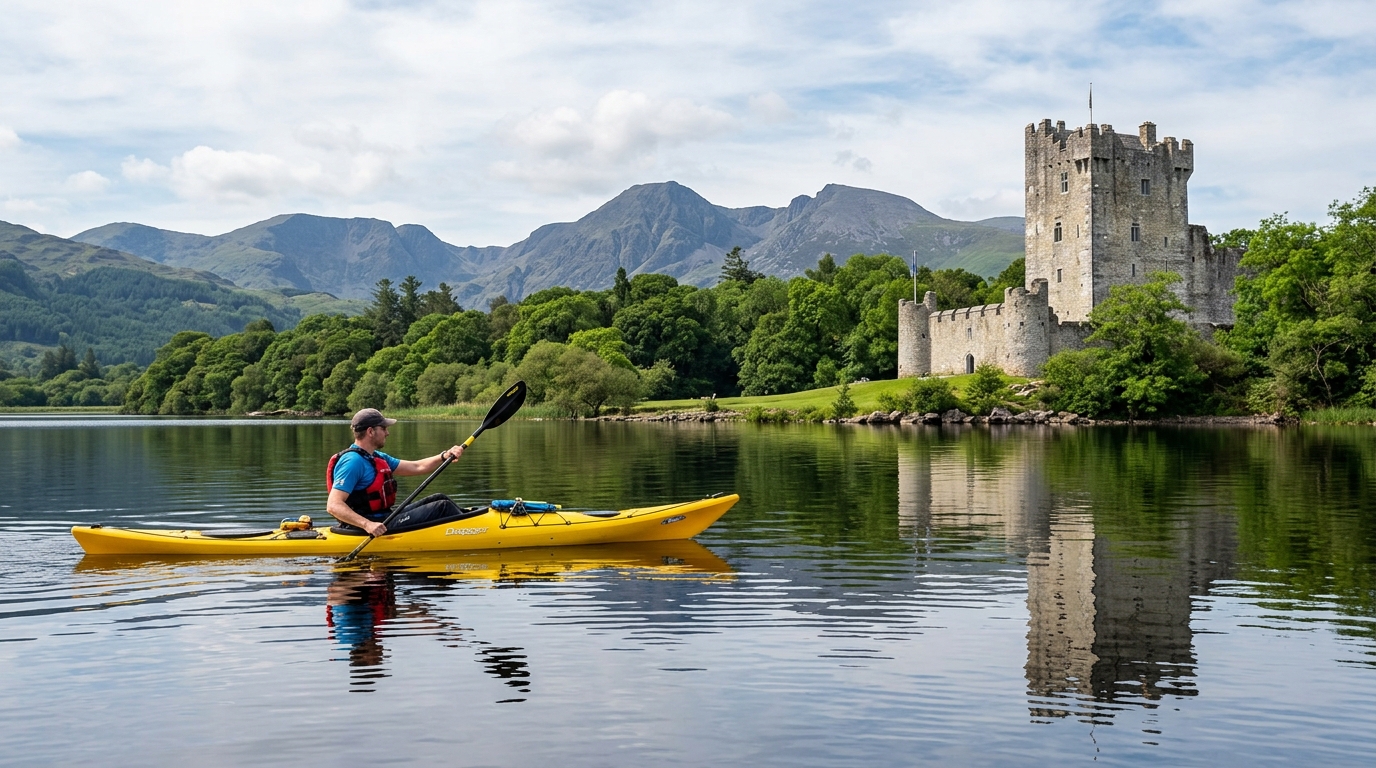
While Ireland has hundreds of inland lakes, Killarney is entirely unique because of its geography. The three lakes sit at the base of Ireland’s highest mountain range. This creates a fjord-like environment where steep, heavily forested slopes drop directly into deep, dark water.
Paddling here is not just about the physical environment; it is a journey through Irish history. As you glide across the water, you pass ruined 15th-century tower houses, 7th-century monastic settlements hidden on wooded islands, and copper mines that date back to the Bronze Age. The opportunity to view wildlife is also unparalleled—it is one of the few places in Ireland where you can kayak beneath soaring White-Tailed Sea Eagles and spot native Red Deer drinking at the water’s edge.
2. Who Should Paddle the Killarney Lakes?
The Lakes of Killarney cater to a broad spectrum of paddlers, but the environment demands respect. Match your own paddling experience and the day’s conditions to the lake you intend to paddle.
- Absolute beginners: Stick to Lough Leane (the Lower Lake) close to the shoreline on calm, windless days, or join a commercial guided tour where large, stable tandem kayaks are used.
- Novice paddlers: Comfortable in the sheltered bays of Muckross Lake and able to cross to Innisfallen Island, but only when the wind is light and the forecast is settled.
- Intermediate paddlers and above: Confident touring kayakers can take on the Upper Lake and the narrow, twisting Long Range channel that connects the upper and middle lakes.
3. When to Go: Weather, Wind, and Water Temps
The most critical safety factor in Killarney is the wind. Because the lakes are surrounded by high mountains, wind does not simply blow across them—it is funneled down the valleys, accelerating as it compresses. A gentle breeze in Killarney town can translate to a powerful, localized squall on Muckross Lake within minutes.
Seasonal Planning
- Summer (May to August): Popular for recreational paddling, with water temperatures peaking at roughly 15°C. However, the lakes are busy with motorized “waterbuses” taking tourists around, so you must stay alert.
- Spring and Autumn: Beautiful scenery with changing foliage, but water temperatures drop to 8°C to 10°C. A wetsuit or drysuit is strongly recommended.
- Winter: Only for experienced, well-equipped paddlers. The water is freezing, and winter storms can make the lakes hazardous quickly.
| Beaufort Force | Wind Speed (knots) | Lake State in Killarney | Recommendation for Paddlers |
|---|---|---|---|
| Force 1-2 | 1 – 6 knots | Glassy, mirror-like | The easiest conditions for most levels, but still check the forecast before crossing to the islands. |
| Force 3 | 7 – 10 knots | Gentle breeze, small ripples | Manageable for touring kayaks with some experience. Sit-on-tops should stay close to shore. |
| Force 4 | 11 – 16 knots | Moderate breeze, whitecaps | The mountains can turn this into a wind-tunnel effect. Best left to experienced paddlers who can read the water. |
| Force 5+ | 17+ knots | Fresh breeze, heavy chop | Conditions turn hazardous fast. Most paddlers should stay ashore and wait it out. |
4. The Mandatory NPWS Permit System
If you are bringing your own private kayak, you cannot simply launch onto the lakes. The National Parks and Wildlife Service (NPWS) strictly enforces a permit system. This is the most common stumbling block for visiting paddlers.
The Biosecurity Threat
The primary reason for the strict permit system is to protect the lakes’ delicate ecosystem from invasive species—specifically the Zebra Mussel, which has devastated other Irish waterways.
How to Get Your Permit (Step-by-Step)
- Power-Wash Your Kayak: Before entering the National Park, you must have your kayak power-washed at a local garage or petrol station in Killarney town. This applies even if your boat looks perfectly clean.
- Keep the Receipt: You must bring the physical receipt from the garage to prove the boat was washed locally on that date.
- Call Ahead, Then Visit the Ranger Station: Phone the NPWS Ranger Base in advance (ideally the day before) to arrange a time when a ranger will be on site, then bring the receipt to the Ranger Base on the N71, about 200m before the Muckross House entrance gate. Full instructions are on the official NPWS canoe permit guide.
- Register: The ranger checks your wash receipt and issues your free permit, valid only for the date(s) written on it.
Note: If you book a commercial guided tour with a local company, they handle all the biosecurity washing and permits for their fleet.
5. The 4 Best Kayaking Routes in Killarney
1. Ross Castle to Innisfallen Island (Lough Leane)
This is the classic Killarney kayaking route. You launch from the slipway beside the 15th-century stone keep of Ross Castle, which sits right on the edge of Lough Leane. From the castle, it is a relatively short, 1.5 km paddle across the open water to Innisfallen Island.
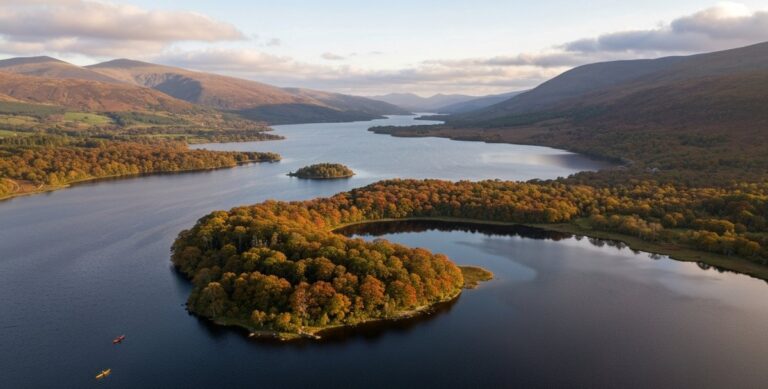
Landing on Innisfallen feels like stepping back in time. The island is home to the ruins of a 6th-century abbey where the famous Annals of Innisfallen (a major chronicle of early Irish history) were written. You can tie off your kayak on the small beach and wander through the ruins, often spotting the resident Sika deer grazing among the ancient oak trees.
2. Muckross Lake and the Meeting of the Waters
Muckross Lake is generally quieter than Lough Leane. Launching from the Dundag slipway near Muckross House, you can paddle the perimeter of the lake, exploring deep limestone caves carved into the shoreline. The highlight of this route is paddling to the Meeting of the Waters, the narrow, picturesque channel where the Upper Lake flows down into Muckross Lake under an old stone bridge.
3. The Upper Lake (Lord Brandon’s Cottage)
The Upper Lake is the most remote and dramatic of the three. It is entirely enclosed by steep mountains. You can launch near Lord Brandon’s Cottage (accessible via a long hike or boat transfer) and paddle the dark, peaty waters. This lake is highly susceptible to sudden wind squalls dropping off the MacGillycuddy’s Reeks, so it is recommended only for experienced paddlers in proper touring kayaks.
4. The Long Range River
This is a winding river channel that connects the Upper Lake to the Meeting of the Waters. It feels like paddling through a primeval jungle, with ancient oak and yew trees leaning out over the water. It is sheltered from the wind, but the channel narrows toward the Old Weir Bridge, where fast-flowing water and a tricky eddy have caught paddlers out before — scout it from the bank first, or portage around if you’re not confident.
6. How to Execute a Killarney Paddle Safely
If you are planning to paddle Killarney independently, execution is key.
- The Launch: Always use designated slipways (Ross Castle, Dundag). Do not drag kayaks through delicate shoreline vegetation.
- Navigating Boat Traffic: Lough Leane is busy with motorized “waterbuses” taking tourists to Innisfallen. These boats are heavy and cannot stop quickly. Keep well clear of them, cross channels perpendicular to the traffic rather than lingering in their path, make yourself visible with a brightly colored buoyancy aid, and follow any instructions from boat crews or rangers on the water.
- Island Landings: When landing on Innisfallen or any other island, look for a natural gravel or shingle spot rather than scrambling up rocky embankments, which damages the shoreline and risks a slipped ankle in a remote location.
7. What Can Go Wrong: Risks on the Lakes
The serene appearance of the lakes can lure beginners into a false sense of security.
- Cold Water Shock: The lakes are fed by mountain runoff and are incredibly cold. A capsize without a wetsuit can quickly lead to cold water shock, rendering your limbs useless within minutes.
- Wind Funneling: As mentioned, the mountains funnel the wind. You might paddle out to Innisfallen on a calm morning, only for a strong breeze to pick up, making the 1.5 km return journey an exhausting battle against steep, choppy waves.
- Getting Lost: The shoreline is highly complex, dotted with dozens of small, heavily wooded islands. In low visibility or heavy rain, it is incredibly easy to lose your bearings. Always carry a waterproof map and a compass.
8. What to Avoid: Common Mistakes
- Ignoring the Permit System: Rangers actively patrol the lakes and can order you off the water if you don’t have a permit. Sort out the power-wash and the phone call to the Ranger Base in advance so you aren’t turned away.
- Approaching the Eagles: White-Tailed Sea Eagles nest in the park. If you spot one, admire it from a distance and keep moving. Disturbing a wild bird at or near its nest is a criminal offence under the Wildlife Act, so never paddle in for a closer look or linger near a nest site.
- Wearing Cotton: A classic beginner mistake. Cotton absorbs water and freezes you. Wear synthetic thermal layers or a neoprene wetsuit.
9. Financial Breakdown: The Cost of Kayaking in Killarney
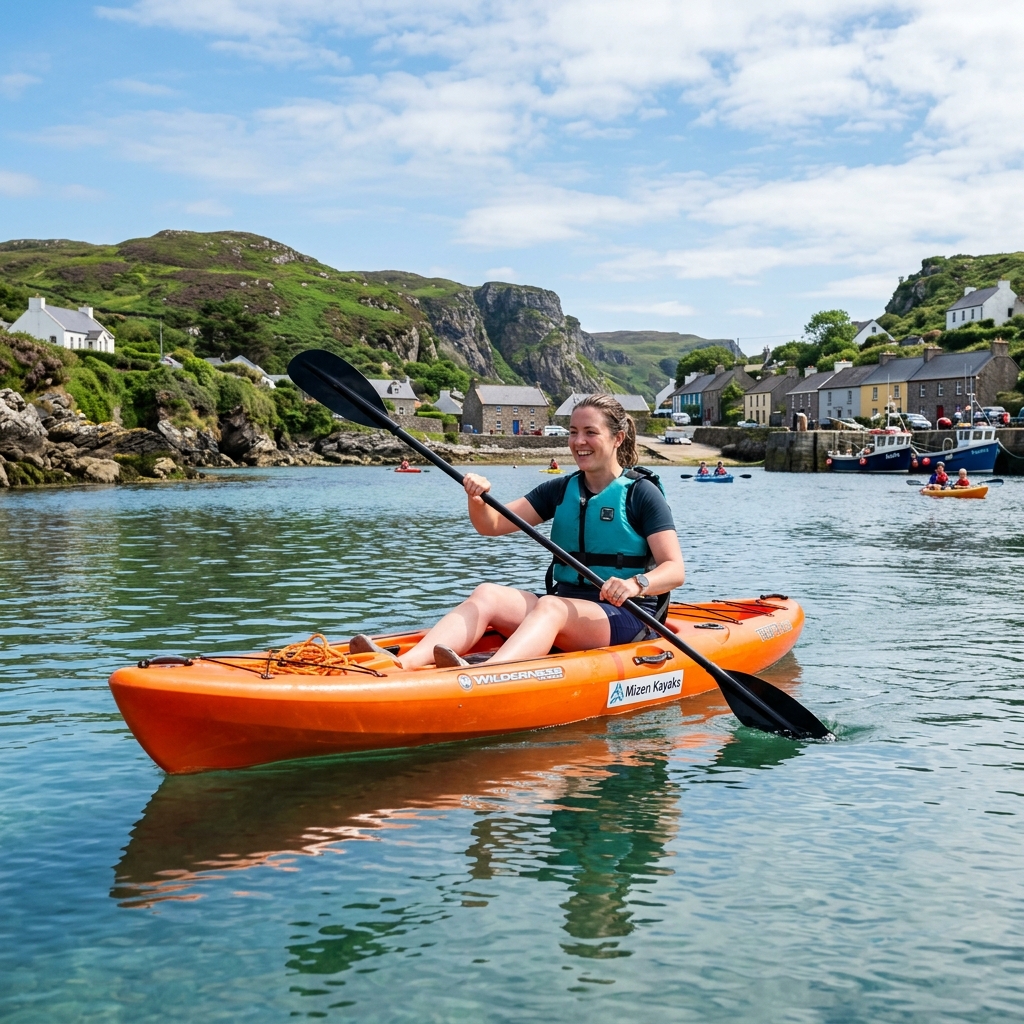
If you are bringing your own boat, kayaking in Killarney is wonderfully cheap, provided you factor in the biosecurity wash. If you prefer the safety and ease of a guided tour, local operators provide exceptional value, supplying all necessary safety gear, boats, and historical commentary.
Here is a breakdown of what you can expect to pay in Killarney in 2026:
Booking a guided tour with a reputable local operator is highly recommended for your first time on the lakes. They handle the permits, supply thick wetsuits, and know exactly where to paddle to avoid the worst of the wind.
10. What Comes Next: Further Reading and Training
If paddling across Lough Leane has given you a taste for Irish kayaking, your next step should be looking at coastal routes or proper skills training.
If you paddled a sit-on-top in Killarney and want to transition to a closed-cockpit touring kayak, look for a Level 2 Skills Course run by a Canoeing Ireland registered provider. These weekend courses will teach you how to paddle efficiently and how to safely exit a closed cockpit in the event of a capsize.
Frequently Asked Questions
Do I absolutely need a permit to kayak in Killarney? Yes. If you are launching a private kayak or paddleboard, you must have a free NPWS permit, which requires proving your boat has been power-washed to prevent invasive species.
Are there guided kayaking tours available? Yes, several highly reputable local tour operators run daily guided trips from Ross Castle. These are excellent for beginners and remove the hassle of organizing permits.
Is it safe to kayak to Innisfallen Island? It’s manageable for novice paddlers on calm, light-wind days. However, it involves a 1.5 km open-water crossing, and if the wind picks up, the lake can turn choppy fast, making the crossing dangerous for inexperienced paddlers in sit-on-top kayaks.
Can I rent a kayak without a guide? Most operators in Killarney only offer guided tours due to the safety risks and permit logistics of the National Park. True “dry hire” (renting a boat to take out yourself) is very rare here.
What should I wear? The water is cold year-round. If you are on a guided tour, they will provide a wetsuit. If you are on your own, a wetsuit is highly recommended, along with a waterproof cagoule (jacket) to protect against the wind. Always wear your buoyancy aid.

No comments yet on this guide.
Be the first to share your experience — conditions, access, hazards, or anything a future paddler should know.
Login to join the discussion