Buying a kayak for Irish waters is completely different than buying one for a sunny lake in Florida or a calm river in the south of France. With over 3,000 km of rugged, wind-swept coastline and vast inland lakes prone to sudden squalls, the kayak you choose needs to be capable of handling dynamic weather.
In this comprehensive 2026 gear guide, we will break down the main types of kayaks suited for Irish paddlers: Sea Kayaks, Touring Kayaks, and Sit-on-Tops. We will look at how to choose the right hull for your experience level, the essential safety gear you must buy alongside it, realistic costs in euros, and the most common mistakes first-time buyers make in Ireland.
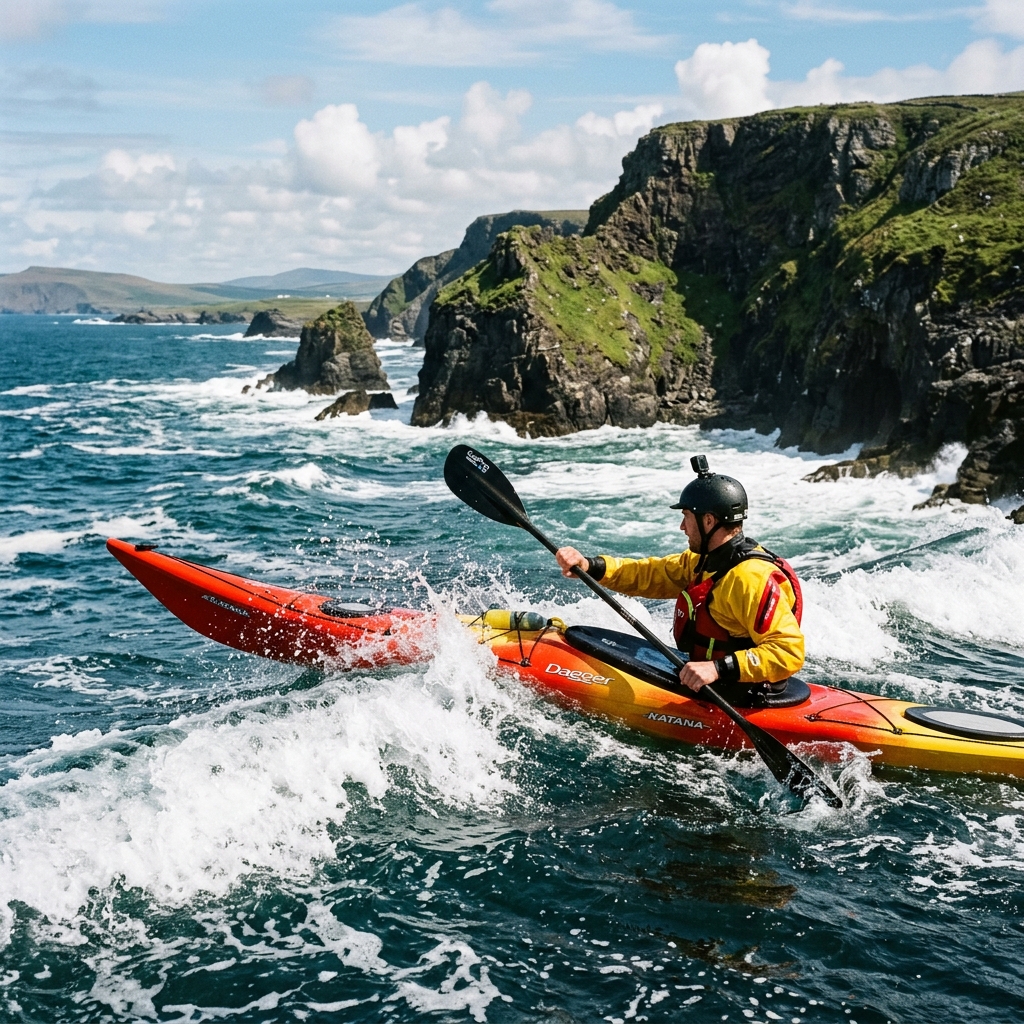
1. Why the Right Kayak Matters in Ireland
The Irish maritime climate is notoriously unpredictable. An Atlantic low-pressure system can roll in across the west coast, turning a calm morning into a choppy, wind-blown afternoon in a matter of hours. The boat you are sitting in dictates whether that change in weather is a minor inconvenience or a major emergency.
The primary factor you are buying when you purchase a kayak for Irish waters is wind resistance. The higher a kayak sits on the water, the more it acts like a sail. A poorly chosen, high-sided recreational kayak can be easily blown offshore by a strong southwesterly breeze. The best kayaks for Irish conditions sit low in the water, feature streamlined hulls to cut through chop, and provide enough stability to let you paddle efficiently when the sea state changes.
Additionally, Irish water temperatures remain cold year-round, ranging from 8°C in winter to just 15°C in late summer. Capsize recovery is a critical component of paddling here. Your chosen kayak must not only be suited to the environment but also to your ability to self-rescue or be rescued by others if you end up in the water.
2. Sea Kayaks: The Coastal Champions
If you look at the search data for kayaks in Ireland, one specific term blows all others out of the water: sea kayak.
Why is a sea kayak the preferred boat for Irish coastal waters?
Wind and Swell Performance
The Irish coast, particularly along the Wild Atlantic Way, is exposed to the full force of the Atlantic Ocean. Sea kayaks have a low profile that prevents them from being blown around like a cork. They are long (typically 14 to 18 feet) and narrow, which allows them to track straight through ocean swell and chop without constantly fighting to maintain a heading.
Safety Bulkheads
They feature sealed bulkheads (watertight compartments) in the front and rear. If you capsize and the cockpit fills with water, the kayak itself stays afloat. This buoyancy is non-negotiable for coastal paddling. These bulkheads also give you storage space for safety gear, spare clothing, and a VHF radio, but hatch seals can wear or leak over time, so pack anything you can’t afford to get wet in a dry bag rather than trusting the compartment alone.
Skeg vs. Rudder
When browsing Irish retailers like CH Marine or I-Canoe, you’ll find sea kayaks fitted with either a “skeg” (a drop-down fin located under the stern) or a stern-mounted rudder, and both suit different boats and routes. A skeg retracts via a slider near the cockpit and stays tucked inside the hull when not in use, which some paddlers prefer on the rocky shorelines of Cork or Donegal where an exposed rudder blade is more likely to take a knock during launching and landing. A rudder gives more direct steering and can help on boats that are harder to turn on a skeg alone, particularly in strong crosswinds. Try both before deciding which setup fits your paddling style.
Material Choices
For beginners hitting the sea, plastic (polyethylene) sea kayaks are the gold standard. They hold up far better than composite boats against scrapes on rocky outcrops and knocks on pebbled beaches, though the hull can still crack, deform, or degrade from UV exposure over time, so it’s worth landing carefully and storing the boat out of direct sun rather than just dragging it up the beach. While heavier than composite (fibreglass or carbon/Kevlar) boats, their durability makes them a pragmatic choice for most Irish coastal environments.
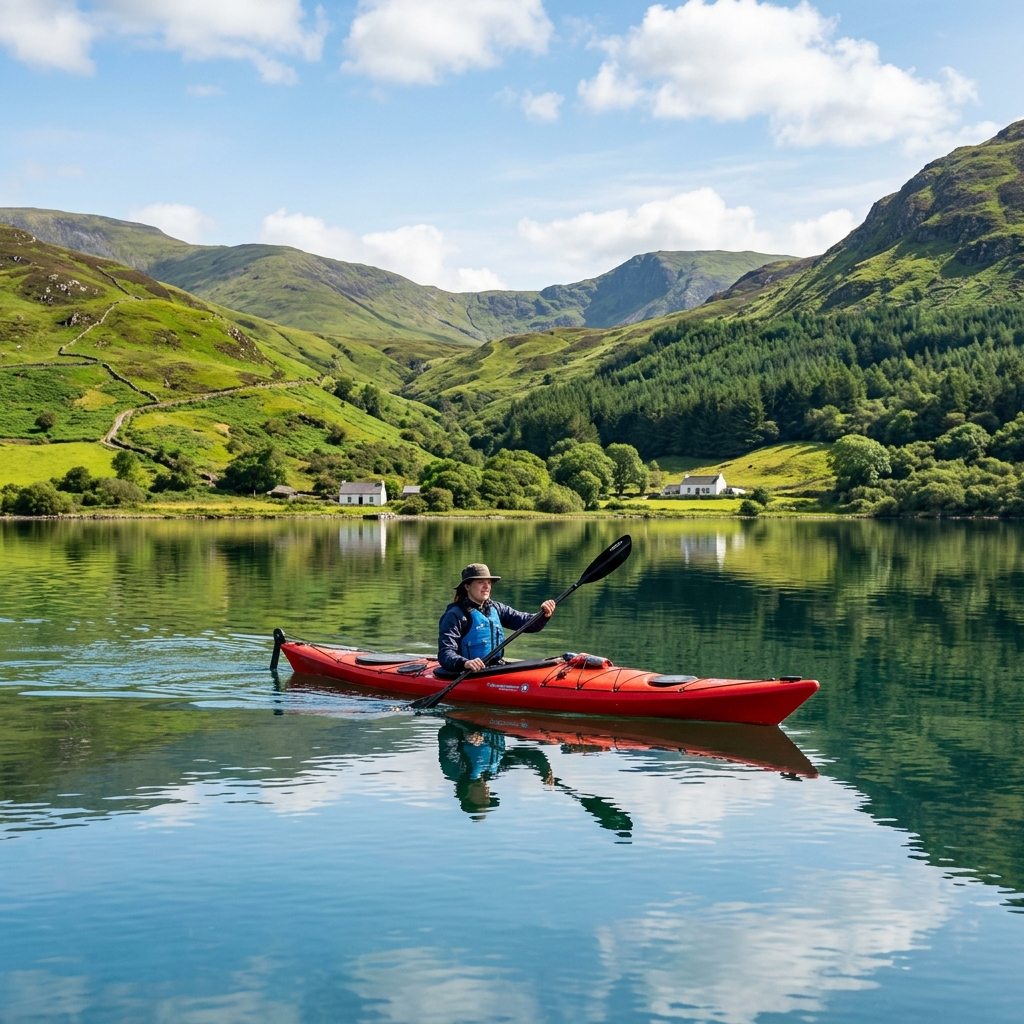
3. Touring Kayaks: The Inland Explorers
If you do not plan on tackling the ocean and instead want to explore Ireland’s incredible network of inland waterways, a Touring Kayak is your best bet.
Touring kayaks are the middle ground between a full-length sea kayak and a short recreational boat. They are slightly shorter (usually 12 to 14 feet) and wider than sea kayaks, making them incredibly stable while still offering decent forward speed.
Why Touring Kayaks Suit the Blueways
Ireland has invested heavily in its Blueways network—a series of navigable canals, rivers, and lakes such as the Shannon Blueway or the Royal Canal. A touring kayak is the perfect vessel for these sheltered waters.
- Comfort: They usually have larger, more forgiving cockpits than sea kayaks, making it easier to get in and out at canal locks or slippery riverbanks.
- Storage: Many touring kayaks have sealed bulkheads, which can give you room to store camping gear for a multi-day trip down the River Barrow or the River Nore, but this varies by model. Check the specific kayak’s buoyancy and hatch layout against your planned route before assuming it’s set up for an overnight trip.
- Maneuverability: Being slightly shorter, they are much easier to turn on narrow canals and meandering river sections where a full 17-foot sea kayak would feel cumbersome.
4. Sit-on-Top Kayaks: The Beginner’s Entry Point
If you are just dipping your toes into the sport, a Sit-on-Top (SOT) kayak is the most accessible entry point.
Unlike traditional “sit-in” kayaks, you sit directly on a molded depression on top of the hull. This removes the “entrapment anxiety” many beginners feel, since there’s no cockpit to escape from if you capsize. That said, falling off is only half the equation—climbing back on top still takes a practised re-entry technique, and it’s worth rehearsing it in calm, shallow water before you rely on it further from shore.
The Limitations of Sit-on-Tops in Ireland
While fantastic for splashing around a sheltered bay on a sunny July afternoon, they have severe limitations in the Irish climate:
- Cold Exposure: You are far more exposed to the elements than in a sit-in kayak, and you’ll regularly get splashed by water draining through the “scupper holes” in the floor. What you wear should match the water temperature and how long you’d likely be immersed if you capsize, not just the season—Irish sea temperatures stay cold enough that many paddlers choose a wetsuit or thermal layers even in summer.
- Wind Susceptibility: They sit very high on the water. This large surface area makes them highly susceptible to being blown off course by offshore winds. An offshore breeze can quickly blow a sit-on-top out to sea, a scenario the Irish Coast Guard responds to multiple times every summer.
- Sluggish Performance: They are generally heavy and wide, making them slow and tiring to paddle over long distances. They are best reserved for short trips near the shoreline.
5. Who Should Buy What? Matching Skill to Boat
Choosing the right kayak depends heavily on your experience level and where you intend to paddle. The rough guidance below maps Canoeing Ireland’s Level 1 to Level 3+ skills framework to typical boat choices as a general starting point—it isn’t an official pairing published by Canoeing Ireland itself, so talk to a retailer or instructor about your specific plans before buying.
| Kayak Type | Primary Use | Typical Length | Storage | Skill Level | Water Type |
|---|---|---|---|---|---|
| Sea Kayak | Coastal touring, open crossings, exposed conditions | 14–18 ft | Sealed bow and stern bulkheads | Level 3+ Skills | Open sea, exposed coastline |
| Touring Kayak | Inland waterways, blueways, multi-day trips on sheltered water | 12–14 ft | Sealed bulkheads on many models (check the exact model) | Level 2 Skills and above | Canals, rivers, lakes, sheltered bays |
| Sit-on-Top | Casual paddling, beginners, warm-weather sessions | 9–12 ft | Rear deck bungees, no sealed storage | Level 1 Skills and above | Sheltered bays, calm inland water |
- Absolute Beginners (Level 1 Skills): Sit-on-top kayaks are a good starting point for those with zero experience, paddling in sheltered bays and calm water on settled summer days.
- Novice Paddlers (Level 2 Skills): Once you start learning proper paddle strokes and edge control, a plastic touring kayak is excellent for exploring inland lakes and slow-moving rivers.
- Intermediate to Advanced (Level 3+ Skills): If you intend to paddle on the open sea, navigate tidal streams, or undertake coastal journeys, you require a proper sea kayak with sealed bulkheads, perimeter deck lines, and a spray deck.
Sizing and Fit
Kayaks are worn, not just driven. A kayak that is too large for you will be impossible to control in the wind, while one that is too small will be uncomfortably cramped. When buying, check the manufacturer’s recommended weight capacity. Your body weight plus your gear should ideally sit right in the middle of that capacity range for optimal performance.
6. When to Paddle: Irish Weather Thresholds
Even the most expensive carbon-fibre sea kayak is useless if you take it out in the wrong conditions. Understanding the Irish weather and the Beaufort wind force scale is critical before buying any boat.
Wind strength is one of several factors that decide whether conditions are paddleable, alongside swell, tide, how exposed your launch site is, and your own skill level. As a rough reference, many recreational paddlers in Ireland get more cautious once wind moves into Force 4, and beginners generally find Force 3 and above harder to manage—but the same wind speed can be manageable in a sheltered bay and genuinely dangerous off an exposed headland, so treat the table below as a starting point, not a fixed rule.
| Beaufort Force | Wind Speed (knots) | Sea State | What It Means for Kayakers |
|---|---|---|---|
| Force 1-2 | 1 – 6 knots | Calm, glassy, small ripples | Generally manageable for most kayak types in sheltered water; still check the tide and forecast first. |
| Force 3 | 7 – 10 knots | Gentle breeze, small wavelets | Touring and sea kayaks handle this reasonably well. Sit-on-tops take more effort and drift more in the wind. |
| Force 4 | 11 – 16 knots | Moderate breeze, frequent whitecaps | Demanding for most paddlers. Suits those with stronger skills in a sea kayak, and depends heavily on exposure and having an escape route. |
| Force 5+ | 17+ knots | Fresh breeze, large waves, spray | Conditions most recreational paddlers should avoid. Even experienced paddlers need a specific plan and reason to be out in this. |
You must check the Met Éireann marine forecast before every trip. Do not rely on general land-based weather apps, as they often underestimate coastal wind speeds and completely ignore sea state and swell height.
7. Common Buyer Mistakes in Ireland (What to Avoid)
When buying your first kayak, it is easy to make mistakes that cost you money or put your safety at risk. Avoid these common anti-patterns:
Buying Cheap Supermarket Inflatables
Every summer, discount supermarkets sell cheap inflatable “kayaks” for under €100, and most of these are not built for the sea. Whether an inflatable is suitable comes down to its design, certification, number of air chambers, and operating pressure, not just the price tag on the box. A basic single-chamber, low-pressure inflatable has high windage, tracks poorly, and punctures easily on rocks or hidden debris, and the Irish Coast Guard has had to rescue paddlers blown out to sea on this type of boat. A high-pressure drop-stitch construction is more rigid, but drop-stitch alone doesn’t make a model suitable for open water—check it carries appropriate CE/ISO certification for its intended use, and keep any inflatable on sheltered inland waters unless it’s specifically built and rated for coastal conditions.
Neglecting the Paddle and PFD
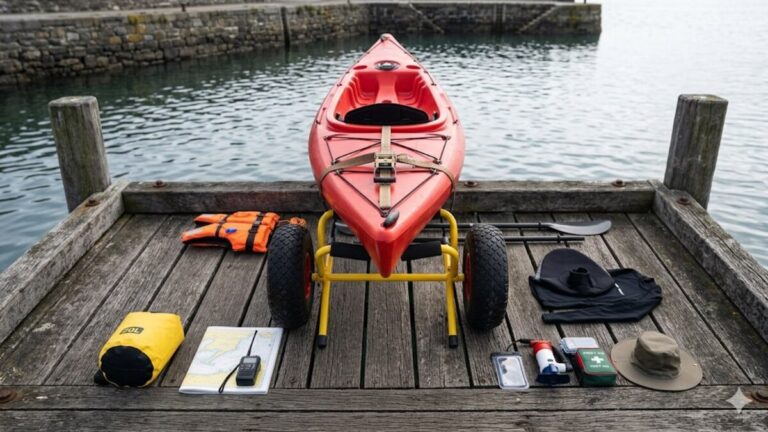
A common mistake is spending €1,000 on a kayak and then buying the cheapest, heaviest aluminium paddle and a poorly fitting buoyancy aid to save money. A heavy paddle will exhaust your arms within an hour. Invest in a lightweight fibreglass or carbon-shaft paddle, and a comfortable, CE/ISO-marked Personal Flotation Device (PFD) designed specifically for kayaking (with large arm cutouts for mobility) and fitted and rated correctly for your weight.
Ignoring Transport Logistics
A 16-foot sea kayak is a massive piece of equipment. Before you buy, figure out how you will transport and store it. Roof bars rated for the load are essential, and J-cradles are a popular option that spread the hull’s weight more evenly than flat bars, though foam blocks or saddles work too depending on your vehicle and the kayak-maker’s own guidance—check your vehicle’s roof-load limit and the manufacturer’s transport recommendations before loading up. For storage, keeping the boat under cover, ideally indoors, will slow UV degradation of the plastic hull over winter, though a UV-resistant cover is a reasonable alternative if indoor space isn’t available.
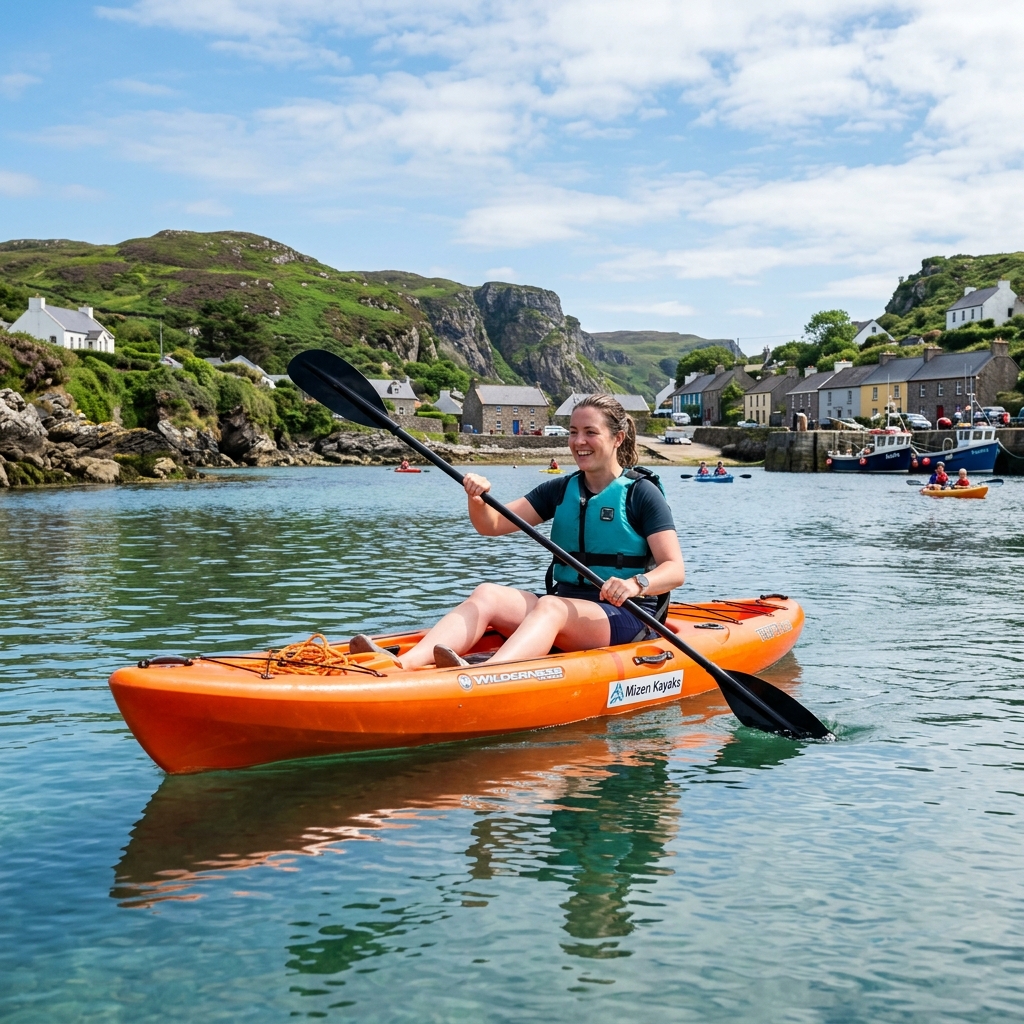
8. Financial Breakdown: What Does it Actually Cost?
Budgeting for a kayak in Ireland can be a shock for first-timers, especially when you factor in the essential safety gear like a wetsuit, paddle, and PFD.
Here is a realistic breakdown of what you can expect to pay for a new, high-quality plastic kayak from a reputable Irish dealer in 2026:
If buying new is outside your budget, the Irish second-hand market is thriving. Keep an eye on dedicated kayak classifieds groups on Facebook, such as Sea Kayak Ireland or Canoe and Kayak Sales Ireland, as well as DoneDeal. A well-cared-for plastic sea kayak will last decades, making second-hand a fantastic option for buyers on a budget.
9. Where to Buy a Kayak in Ireland
We strongly recommend buying from a dedicated Irish paddlesports retailer rather than a general sporting goods store or an anonymous online warehouse. Dedicated retailers provide expert advice, can properly fit you for your boat, and handle warranty issues locally.
- CH Marine: With locations in Cork, Skibbereen, and Northern Ireland, they are one of the largest suppliers of marine gear in the country.
- I-Canoe: Based in Dublin, this is a dedicated paddler’s shop run by experts. They are the go-to for high-end sea kayaks, touring boats, and whitewater gear.
- Bantry Bay Canoes: Located in West Cork, they specialize in everything from recreational sit-on-tops to expedition-ready sea kayaks.
- Great Outdoors: Located in Dublin city centre, they carry a solid range of entry-level and touring boats alongside their outdoor gear.
10. What Comes Next: Training and Preparation
Once you have purchased your kayak, your journey has just begun. The absolute best investment you can make is not in better gear, but in your own skills.
Before taking your new boat on the open sea, sign up for a Level 3 Skills Course with a Canoeing Ireland registered provider. These weekend courses will teach you how to paddle efficiently, how to perform assisted rescues, and how to read the weather and tides. Joining a local kayaking club is also an incredible way to meet experienced paddlers who can show you the safest and most scenic routes in your area.
Frequently Asked Questions
What is the best kayak for beginners in Ireland? For absolute beginners paddling in sheltered, calm waters during the summer, a Sit-on-Top (SOT) kayak is the most stable and user-friendly choice. If you want to progress to longer trips on lakes and rivers, a stable touring kayak is the better long-term investment.
Can I take a touring kayak on the sea? Touring kayaks can handle very calm coastal bays and estuaries, but they lack the length, speed, and specialized hull design needed to safely navigate ocean swell, tidal currents, and strong coastal winds. For open coastal paddling, a proper sea kayak is essential.
Do I need a license to kayak in Ireland? No, you do not need a license or a permit to kayak on Irish coastal waters, public lakes, the Shannon Navigation, or the canals. Waterways Ireland’s Vessel Permit (Grand Canal, Royal Canal, Barrow Navigation) and Registration (Shannon Navigation, Shannon-Erne Waterway) systems are aimed at powered and moored boats, not unpowered kayaks and canoes. At locks, paddlers simply portage around rather than passing through, since lock turbulence makes them unsafe for small craft.
Is a longer kayak faster? Generally, yes. A longer kayak, like a 17-foot sea kayak, has a longer waterline which increases its hull speed and makes it track straighter. However, it also makes it harder to turn quickly compared to a shorter 12-foot touring kayak.
Why shouldn’t I buy a cheap inflatable kayak for the beach? Cheap supermarket inflatables sit very high on the water and act like a sail. In Ireland’s windy coastal environment, even a mild offshore breeze can blow these inflatables rapidly out to sea, leading to dangerous rescue situations.
How heavy is a plastic sea kayak? A standard plastic sea kayak typically weighs between 25 kg and 30 kg. You will need to factor this in when deciding how you will lift it onto your car’s roof rack and carry it down to the water. A kayak trolley is highly recommended.

No comments yet on this guide.
Be the first to share your experience — conditions, access, hazards, or anything a future paddler should know.
Login to join the discussion