Most kayak fishing in Ireland needs no state licence, but rules apply. Inland Fisheries Ireland (IFI) says you can fish the sea for almost all species, and trout, pike and coarse fish, without one. From 1 June 2026 you may keep three pollack in 24 hours. Salmon and sea trout need a state licence, and some lakes need a permit.
We checked the rules, prices and permits in this guide against their sources on 4 October 2026: the bye-law or statute, the IFI or Department of Transport page, or the retailer’s product page. Where a site blocked our checks we read an archived copy and say so, and where we could not confirm something the text says that too. This guide does not cover sea angling in Northern Ireland, insurance, or lights and flares, and it is not legal advice. Fishing rules change, so check with IFI before you keep a fish.
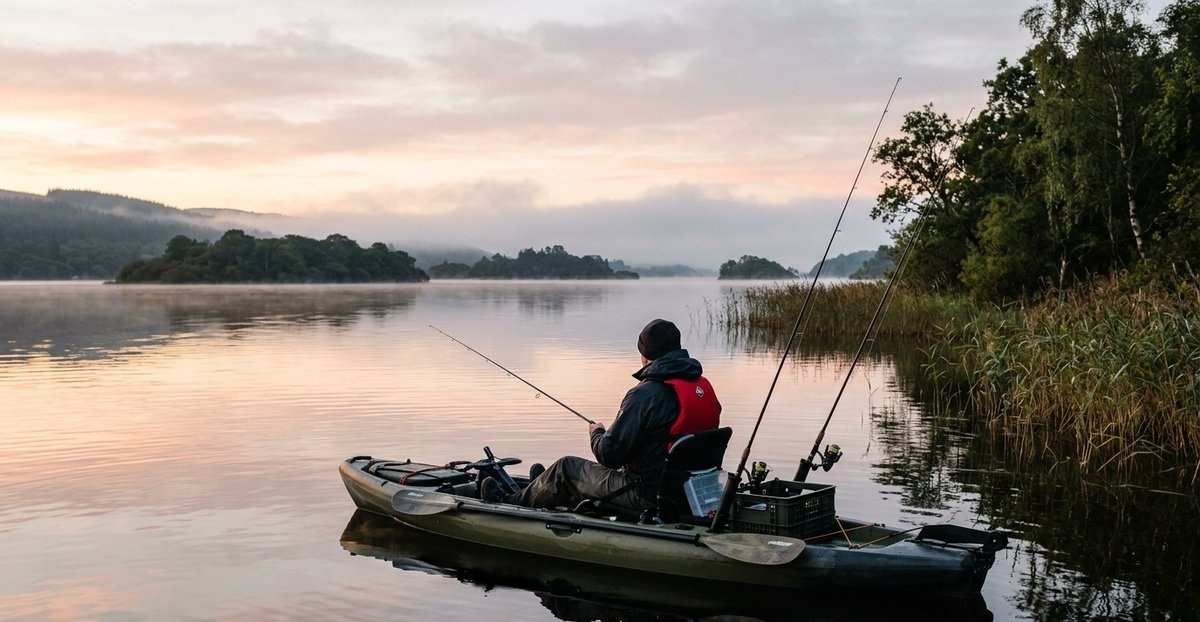
Kayak Fishing Rules in Ireland at a Glance
The rules attach to the fish and the water, not the boat. We found no licence or bag-limit rule that names kayaks.
| Fish or water | State licence | Limit or rule | Source |
|---|---|---|---|
| Sea angling, most species | No, for almost all species | The species limits in this table still apply | IFI |
| Pollack | No | From 1 June 2026, keep no more than 3 in 24 hours and return the rest | Bye-law No. 1028 of 2026 |
| Bass | No | Set each year. For 2026 IFI lists catch and release only in February and March, otherwise 2 a day with a 42 cm minimum. The EU rule says up to 3 a day but leaves stricter national limits in place, so keep to IFI’s 2 and check before you keep one | IFI, EU Regulation 2026/249 |
| Brown trout | No | A permit on some waters. Size and bag limits differ from water to water. Most fisheries open between 15 February and 1 March (IFI’s trout page says up to 17 March) and most close on 30 September | IFI |
| Pike | No | Kill no more than 1 a day, and no pike over 50 cm | IFI (Bye-law No. 809 of 2006) |
| Coarse fish | No | Kill no more than 4 a day and none over 25 cm. Live fish may not be used as bait | IFI (Bye-law No. 806 of 2006) |
| Salmon and sea trout | Yes: €36 for a day, €50 for 21 days, €100 for the year | A permit or the owner’s permission as well. Gill tags, river tables and an annual bag limit apply. Ask IFI whether the licence covers sea trout caught at sea | IFI licence store |
A state licence is the national licence that IFI sells. A permit is a local ticket from the owner or manager of the water. Having one does not give you the other.
Rules change. IFI ran a public consultation on the pike and coarse fish bye-laws from 22 September to 2 November 2025, and we found no amended bye-law on 4 October 2026. These are the limits we could find, so confirm them with IFI before you keep a fish.
Do You Need a Licence to Fish From a Kayak in Ireland?
Mostly no. IFI’s rules page says: “For trout, pike and coarse fishing, a licence is not required (but you may need to purchase a local permit). You can fish in the sea for almost all species without the need for a licence or permit.” We read that page as an archived copy from 14 March 2026, because the live page blocks automated checks. Citizens Information, the State’s public information service, says you need a State licence to fish for salmon and sea trout (page edited 19 May 2026).
“Almost all species” matters, because it tells you exceptions exist. Salmon and sea trout are the main ones, and some species carry bag limits even where no licence is needed.
Which fish need a state licence?
Salmon and sea trout need one. IFI says: “A State Licence is required to fish for salmon and sea trout, but does not entitle you to fish. Permits or permission from fisheries owners must be obtained.” IFI’s online store lists the 2026 prices: €36 for a one-day licence, €50 for 21 days and €100 for the year across all districts. The store also says: “You must be in possession of your salmon and sea trout licence before fishing.”
Salmon licences come with gill tags. IFI’s 2026 salmon regulations say all rod licence holders “must affix a gill tag to all retained salmon (any size), or sea trout (over 40 cm).” From 3 April 2026 there is a maximum annual bag limit of seven salmon or sea trout over 40 cm per angler on rivers where salmon may be kept. Within that, one fish may be kept from 3 April to 31 May, up to three a day from 1 June to 31 August (one on a one-day licence), and none from 1 September, when it is catch and release only. On other rivers, angling for salmon and for sea trout over 40 cm is prohibited, and some rivers are catch and release only. IFI’s river tables show which is which, so read them before you go.
Sea trout need extra care. IFI’s rules page says: “It is an offence to kill any sea trout in the Galway, Connemara or Ballinakill Fisheries Districts including at sea from Hags Head in County Clare to Clew Bay”. The 2026 salmon regulations list a second no-kill area in the Kerry District, the sea east of a line between Bolus Head and Lambs Head and the waters that flow into it, and set a daily limit of three sea trout under 40 cm per angler. Citizens Information does not say whether the licence covers sea trout caught at sea rather than in rivers and estuaries, so ask IFI before you target them from a kayak in tidal water.
Which waters need a permit?
A permit is a local ticket from the owner or manager of the water, and IFI sells many of them through its permit shop. Three examples we checked show how much they differ.
Blessington Lake (Pollaphuca) is controlled and managed by the ESB, and IFI’s permit shop says “a permit for all types of fishing is required”. The shop lists a trout fishery adult season permit at €30 and an adult day permit at €5. A kayak also needs a separate ESB boating licence, so you pay for two documents.
The Midland Fisheries Group permit covers Loughs Sheelin, Owel and Ennell among other waters. For 2026 an adult annual permit is €45 and a one-day permit is €20. The permit is not needed on the main River Shannon, and Lough Sheelin is closed to all fishing from 13 October to the end of February. IFI adds: “Possession of a permit does not allow trout angling during a fisheries closed season.”
Some big western fisheries need no permit for trout. IFI’s trout page says: “Some fisheries such as Loughs Mask, Corrib, Conn, Derg, Carra, Ree, Cullin, and Arrow do not require permits.” That page says nothing about launching a kayak or about small-craft rules on those loughs, and we found no official page that does. Ask the owner or the local angling club before you launch.
Bag Limits and Closed Seasons: Pollack, Bass, Trout and Pike
Bag limits are where a kayak angler is most likely to break a rule by accident. Pollack is new in 2026, bass limits are set again each year, and the freshwater limits vary by species and water.
What is the pollack limit from 1 June 2026?
Pollack Fishing Conservation Bye-Law No. 1028 of 2026 came into operation on 1 June 2026. It applies to “recreational fisheries, including from shore”. It bars taking and killing, or having in possession, more than three pollack in any 24 hours, and any others “shall be carefully handled and returned to the water from which they were taken.” Breaking the limit is an offence. Because the bye-law also covers fish in your possession, count what you already hold, for example on a multi-day trip.
The Department of Climate, Energy and the Environment explained the effect in a press release on 14 May 2026: “Once this limit is reached, anglers may continue to fish on a catch and release basis.” The bye-law sets no minimum size. It covers pollack (Pollachius pollachius), not saithe, which is also called coalfish.
Discover Ireland’s listing for a West Cork guide names pollack among the species it targets from kayaks. Check the current limit with your guide before you go.
What are the bass rules?
Bass limits are set again each year, so check before you keep one.
The EU sets recreational bass measures for Irish waters in its yearly fishing opportunities regulation. For 2026, Article 10 of Council Regulation (EU) 2026/249 allows only “catch and release” fishing for bass with a rod or handline from 1 February to 31 March, and bars keeping, relocating, transhipping or landing bass caught in that period. In January and from 1 April to 31 December 2026 it allows up to three bass per fisher per day, with a 42 cm minimum size. The 2025 regulation set the daily limit at two. IFI’s rules page now has a 2026 bass entry, which we read as an archived copy from 4 October 2026. It gives “only catch-and-release fishing” from 1 February to 31 March and a “2 fish bag limit” with a 42 cm minimum in January and from 1 April to 31 December. That is one fish a day fewer than the EU maximum. The EU figures run out on 31 December 2026, and IFI’s entry is headed 2026 as well.
The EU rule applies “without prejudice to more stringent national measures on recreational fisheries”, so IFI’s two-fish figure is the one to follow. We found no Irish bass bye-law after 2016 on the Department’s yearly lists, so we cannot say which instrument IFI’s figure rests on. Ireland’s older bass bye-law, S.I. 368 of 2007, capped the bag at two fish and banned rod fishing for bass from 15 May to 15 June each year. Bass Fishing Conservation Bye-law No. 941 of 2016 revoked it and came into operation on 15 May 2016, but it only covered that year. The Irish Statute Book still shows the 2007 text without a note of the revocation, so older web pages that mention that closed season are out of date.
Bass rules have changed before. In August 2018 IFI told anglers the recreational fishery was “now operating on a catch and release basis for 2018”. If you are unsure, return the fish and ask IFI for the current position before you keep one.
What are the trout, pike and coarse fish rules?
In fresh water IFI says “The only legal method to catch freshwater fish is by rod and line”, and that a person “may fish with not more than two rods at any time”. Brown trout limits differ by water. IFI says: “Almost every river and lake has defined size limits for brown trout. These vary from water to water.” We found no single national trout bag or size limit, so read the rules for the lake or river you plan to fish. Most brown trout fisheries open between 15 February and 1 March and most close on 30 September, though some close on dates between 15 September and 12 October, and clubs may set their own opening and closing dates.
For pike, IFI’s summary of Bye-law No. 809 of 2006 says: “It is prohibited to kill more than 1 pike in any one day” and “It is prohibited to kill any pike greater than 50 cm fork length.” Larger pike go back. For coarse fish, Bye-law No. 806 of 2006 bars killing more than 4 on any one day, or any coarse fish greater than 25 cm, and live fish may not be used as bait.
Two more rules apply in fresh water. Killing or keeping a fish that was not hooked in the mouth is prohibited in every fishery district, and eel fishing is closed. For freshwater offences such as fishing in a closed season, taking an undersized fish or going over the pike or coarse fish bag limit, IFI says an on-the-spot fine of €150 can be issued. Breaking the pollack limit is an offence under its own bye-law, and we have not seen it listed for on-the-spot fines.
What about tope, skates and rays?
We found no Irish recreational bag limit for tope, spurdog, skates or rays, so do not read that silence as permission to keep them. IFI’s tope page says: “The conservation status of the tope is listed as critically endangered by the IUCN Red List”, and rates its status on the Irish Red List for cartilaginous fish as vulnerable. IFI’s page on the common skate species complex says the common blue skate and the flapper skate are both listed as Critically Endangered by the IUCN Red List.
The EU’s 2026 fishing opportunities regulation bars Union fishing vessels from fishing for, retaining, transhipping or landing the common skate complex in Union waters of ICES subareas 4, 6, 7 and 8, and says accidental catches “shall not be harmed and shall be promptly released.” That article is addressed to fishing vessels, and we found no official statement on whether it applies to an angler on a kayak. Treat it as good practice anyway. Keep these fish in the water where you can, unhook them quickly and release them.
Lifejacket Law, Safety and Anchoring for Kayak Anglers
An angler sits still, often alone, with a line in the water. That changes the risks compared with paddling.
Do you have to wear a lifejacket when fishing from a kayak?
Yes, whenever you are under way, and the Department of Transport recommends you keep it on at anchor too. This guide uses lifejacket and PFD (personal flotation device) for the same thing, and the Code of Practice says the term PFD “includes a buoyancy aid”. Regulation 6(1) of S.I. 921 of 2005 says a person on a pleasure craft under 7 metres “shall wear a suitable personal flotation device while on board an open craft or while on the deck of decked craft, other than when the craft is made fast to the shore or at anchor”. The regulation does not name kayaks. The Department’s Code of Practice does: its kayak chapter says “Wear a PFD/lifejacket – it is a legal requirement”. Waterways Ireland’s 2026 notice says PFDs must be “worn in accordance with S.I. 921/2005”.
The exemption names a craft made fast to the shore or at anchor. A kayak that is drifting or holding position by paddling is neither, so assume you must wear it. The Department’s Marine Notice 32 of 2019, amended in February 2025, says: “Whilst not a requirement of the PFD regulations, it is recommended that anyone alone on board a craft should wear a PFD at all times regardless of weather conditions, the size of the craft or whether the craft is made fast to the shore or at anchor.” It also recommends that all persons wear a PFD at all times on an open pleasure craft. If you are the only person on board, as in a one-person kayak, keep the lifejacket on when you stop to fish. On Blessington the ESB’s boating licence requires everyone aboard to wear suitable buoyancy aids or life jackets, and the condition we read has no exception for a craft at anchor.
What counts as suitable? S.I. 400 of 2018 defines a suitable PFD as one that gives positive buoyancy in the waters you are likely to meet, is appropriate to your body weight and carries the CE conformity marking or the mark of conformity set out in Directive 2014/90/EU. You may see 50 Newton described as the legal rating. The definition we read names no Newton figure, so check the CE mark and the weight range on the label. According to the Marine Notice, an authorised officer can serve a fixed payment notice of €150 for a PFD offence. If it is not paid within 21 days, prosecution can follow, with a fine of up to €5,000 on summary conviction.
What do the official guides say about fishing alone and cold water?
Water Safety Ireland’s angling advice, read as an archived copy from September 2024, says to bring somebody with you, not to fish alone, and to tell somebody where you are going and when you plan to return. The Code of Practice tells kayakers never to operate alone and to canoe in company, and its sea kayaking section says: “Do not operate alone – kayak in company.” Canoeing Ireland’s safety page lists “Never paddle alone” among its three golden rules and adds: “It is not advisable to go out alone, it is much safer to go out in groups of 3 or more.” If you fish alone, you are going against that advice. At the least, tell a shore contact your plan and carry a VHF radio, as the Code recommends. Better, find a fishing partner.
The Code says what that contact should know: “a designated person ashore should know your departure and return times, where you are going, and what to do to raise the alarm if necessary.” It names marine VHF radio as the recommended way to call for help and says “A mobile phone should not be relied on as the primary method of contacting the emergency services.” For sea kayaking it says you “should carry a registered personal locator beacon (PLB)”. That advice sits in Part B of the Code, which is guidance, not law. The lifejacket rule is the legal requirement.
Radios and beacons have paperwork. The Department of Transport says a Ships Radio Licence applies to “all vessels, irrespective of size, with marine radio transmitting equipment onboard”. The Code’s appendix says the licence covers handheld radios. For pleasure vessels with VHF and DSC, the qualification is the Radio Operators Short Range Certificate. The official pages do not name kayaks, so confirm with the Department before you rely on a handheld. ComReg registers PLBs, not the Coast Guard, and accepts only beacons programmed with the Irish country code, 250. It passes the details to the Irish Coast Guard.
Cold water is the other risk. The Code says: “the initial cold shock can cause you to gasp, breathe uncontrollably, breathe in water and panic.” Water Safety Ireland says cold water shock can cause “deep gasping, uncontrollable breathing, increased heart rate & blood pressure, panic, incapacitation and drowning” within two to three minutes. If you capsize at sea, the Code’s sea kayaking section says: “If capsized and floating outside your craft, remain with it. It offers a better target to rescuers and has a high buoyancy factor. Do not attempt to swim for shore unless adjacent to the shore.” That advice sits in the sea kayaking section, so on a sheltered lake or river close to the bank, use your own judgement about reaching the shore.
How do you anchor from a kayak?
Anchoring a small boat in a current is a recognised risk in the Code of Practice, and kayak-specific guidance is thin. We found no Irish official wording on kayak anchor trolleys, quick-release lines or cutting the line. The closest source is Appendix 4 of the Code, which covers small boats in general and does not name kayaks.
It says: “Do not anchor by the stern. Anchoring a small boat by the stern may result in swamping and capsize.” It adds: “In a current, the force of the water can pull the stern under.” It also says “Anchor lines should not be led aft within a boat”, because the craft may broach into the weather or tide and be swamped, and that an anchor line should leave over the forward end of a boat.
An anchor trolley moves the point where the line attaches along the deck. The Code does not mention trolleys, so check where yours leads the line before you rely on it. Our kayak trolley guide covers anchor trolleys as hardware. We have no official source for kayak-specific technique, so treat the rest as our caution, not a rule: do not anchor in tidal or moving water, keep a knife within reach, rig a line you can release under load, and practise releasing it in shallow water first.
How far out is too far?
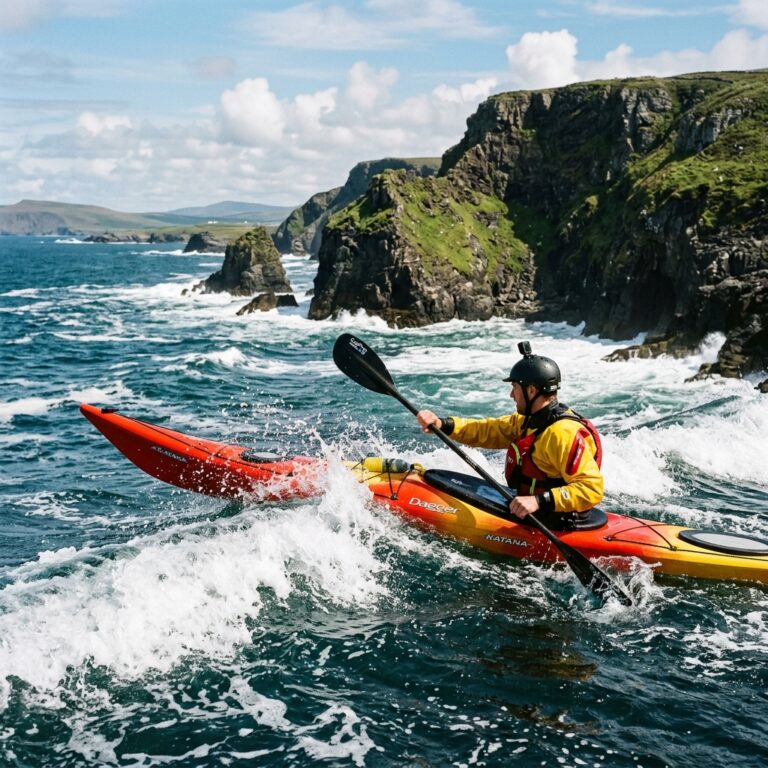
There is no official distance limit for a recreational kayak in Ireland. We found none in the Code of Practice. What it does give, in its sea kayaking section, is a wind guideline: “Canoeing in a windforce 4 or above should only be considered for the very experienced.” Force 4 is 11 to 16 knots, about 20 to 30 km/h, and our sea kayaking guide has a Beaufort table that shows what each force looks like on the water.
The Code does not treat fishing kayaks separately. If you fish on the sea from a kayak of any type, its sea kayaking precautions (company, a forecast check, a registered PLB and a nominated person ashore) apply to you. It also says: “Inflatable craft such as inflatable kayaks are not suitable for use in sea kayaking”, and recommends sea kayak specific training and joining a club before you go. A sit-on-top fishing kayak is built around a work deck and room for gear rather than distance paddling. Until you have sea kayak training, we would stay within easy reach of a landing place, avoid offshore winds and go only when the forecast wind is below force 4. See our kayaking safety guide for the basics.
Check the forecast before every trip. Met Éireann’s marine page carries the Sea Area Forecast and shows a Small Craft Warning when winds of force 6 or higher are expected. The Department of Transport says the forecast covers Irish coastal waters out to 30 nautical miles (about 56 km). No warning does not mean conditions suit a beginner. Compare the forecast wind with the Code’s force 4 guidance.
Which Kayak Suits Fishing?
Retailers sell fishing kayaks as a separate class: a wide sit-on-top with rod holders and room for gear. Our buyer’s guide explains the wider choice between sea, touring and river kayaks.
Sit-on-top, pedal or inflatable: which type?
All nine kayaks in our price table are sit-on-tops. The retailers describe them with flush-mounted rod holders, rails or tracks for accessories and, on some models, a cavity for a fish finder transducer. A sit-on-top gives you a flat deck to work from.
The main choice is paddle or pedal. Pedal-drive models cost more: the cheapest pedal model in our table is €1,599, against €764 to €1,299 for the paddle models. Skipjak lists a pedal FishJak at €1,399, which showed as unavailable on 4 October, and Darren’s Kayaks lists an inflatable pedal model, the Vibe Uptown 100 Lite, at €1,295 as a package with pedal drive and paddle. Darren’s Kayaks also sells two hulls with the pedal drive as an optional extra, which the table shows.
Inflatables face limits from two sources. IFI’s permit shop page for the ESB boating licence says: “Please note: The use of any type of inflatable craft or stand-up paddleboard (SUP) is prohibited”, and the licence covers Blessington, Inniscarra and Assaroe. For sea kayaking, the Code of Practice says inflatable kayaks are not suitable. Check the rules for any other water before you buy an inflatable.
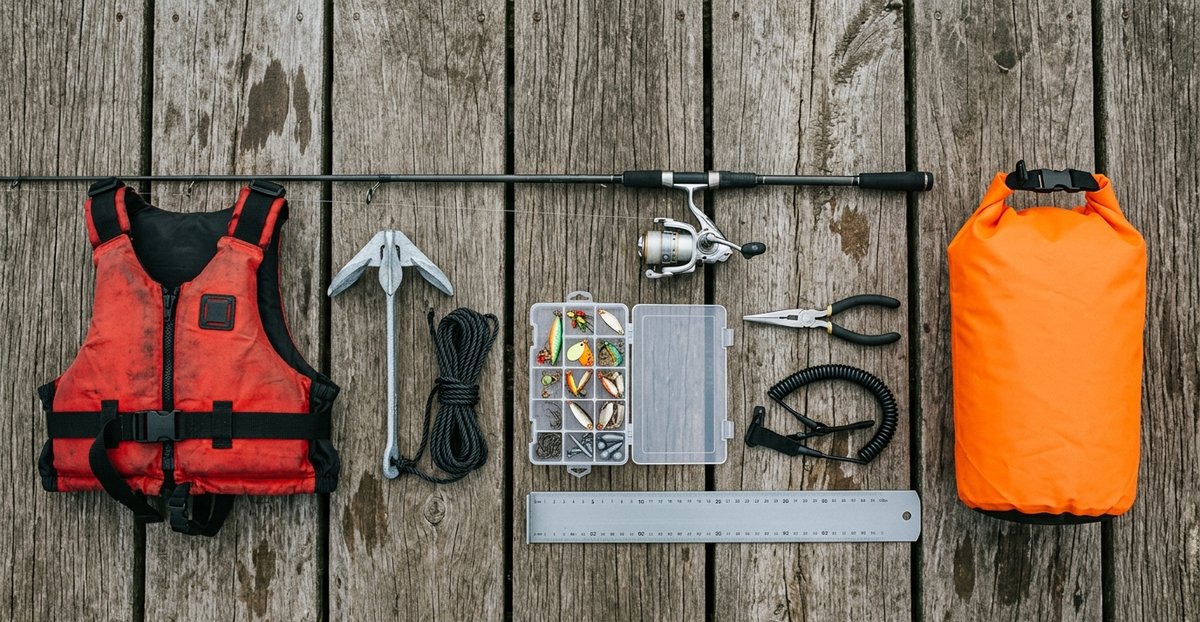
What should you look for in a fishing kayak?
Read the specification, not the photo. The models in our table are 305 to 406 cm long and 77 to 91 cm wide, and weigh 25 to 50.5 kg. Length and width do not predict capacity on their own: the 305 cm Moken 10 Angler V2 lists a recommended capacity of 200 kg, more than the 406 cm Islander Strike Angler’s maximum of 181 kg, though the two retailers do not state capacity the same way.
The way a retailer states capacity matters. The Wilderness Systems page for its Tarpon E 120, sold by Canoe Centre, labels the figure “Max Weight Capacity (Paddler and Gear)”. Add up your own weight, the rods, the anchor, a cool box and any battery before you trust a capacity figure. The capacities in our table run from 160 to 227 kg.
Look at the fittings. The retailers list flush-mounted rod holders, Uni-Track or similar rails for accessories, and a cavity for a fish finder transducer on some models. Our trolley guide covers getting a loaded fishing kayak from the car to the water, which matters for a pedal kayak that weighs 50 kg complete.
What Do Fishing Kayaks Cost in Ireland?
We read the prices in this table on retailer pages on 4 October 2026. Some models showed as out of stock or backordered, so check with the retailer before you plan a purchase. Retailers change prices often.
| Model | Type | Price on 4 October 2026 | Length × width | Weight, capacity | Retailer |
|---|---|---|---|---|---|
| Feelfree Moken 10 Lite | Sit-on-top, paddle | €764.15 (was €899) | 315 × 79 cm | 25 kg, 160 kg | CH Marine |
| Feelfree Moken 10 Angler V2 | Sit-on-top, paddle | €899 to €1,050 | 305 × 84 cm | 29.5 kg without seat, 200 kg | CH Marine |
| Islander Strike Angler | Sit-on-top, paddle | €933 (regular €1,167) | 406 × 81 cm | 34 kg, 181 kg | Canoe Centre |
| Viking Profish 35 | Sit-on-top, paddle | €955 package with paddle and backrest | 350 × 77 cm | 27 kg, 160 kg | Darren’s Kayaks |
| Feelfree Lure 10 V2 with Gravity Seat | Sit-on-top, paddle | €1,274.15 to €1,299 | 305 × 91 cm | 31 kg, 170 kg | CH Marine |
| Feelfree Moken 10 Angler Pedal | Sit-on-top, pedal drive | €1,599 | 315 × 89 cm | 32.7 kg without chair or spinning set, 192.7 kg | CH Marine |
| Vibe Shearwater 125 | Sit-on-top, pedal drive optional | €1,750 kayak only, €2,250 with pedal drive | 381 × 88.9 cm | 37 kg, 215 kg | Darren’s Kayaks |
| Feelfree Moken 12.5 Angler Pedal | Sit-on-top, pedal drive | €1,799 | 385 × 81 cm | 50.5 kg complete, 200 kg | CH Marine |
| Cajo Outpost 128 PDL | Sit-on-top, pedal drive optional | €2,800 kayak only, €3,750 with drive | 386.1 × 88.9 cm | 34 kg (47 kg rigged), 227 kg | Darren’s Kayaks |
Weights and capacities are as each retailer states them, and some weights exclude the seat, chair or pedal drive.
The cheapest fishing-specific kayak we found was Skipjak’s FishJak 10 at €699 (305 × 80 cm, 170 kg capacity), but the store showed it as unavailable on the day, and its other fishing models showed as unavailable too. CH Marine’s category page showed no stock for the Moken 10 Lite, and Canoe Centre showed the Strike Angler as backordered, so ask before you order. Hobie’s Irish dealer, Hobie Cat Centre Ireland, says on its home page that it sells Hobie’s range of kayaks, including fishing models, but shows no prices.
Extras add up. CH Marine lists a Feelfree swivel rod holder at €29.95 and a Railblaza suction mount at €35. Skipjak lists a folding galvanised kayak anchor at €21.95. A buoyancy aid or lifejacket, a wetsuit or drysuit, a paddle, rods and tackle all come on top, and our sea kayaking guide prices the buoyancy aid and clothing tiers. Canoe Centre says kayaks cannot go by courier because of their size, so it delivers them with its own transport. Its shipping policy gives lead times of up to 15 working days from the date of order, and some of its product pages say 10. We did not price second-hand kayaks.
Where Can You Try Kayak Fishing in Ireland?
Try a sheltered water you can reach from a slipway, close to help, with the permit sorted before you go. These are the places and options we could source, with what each asks of you.
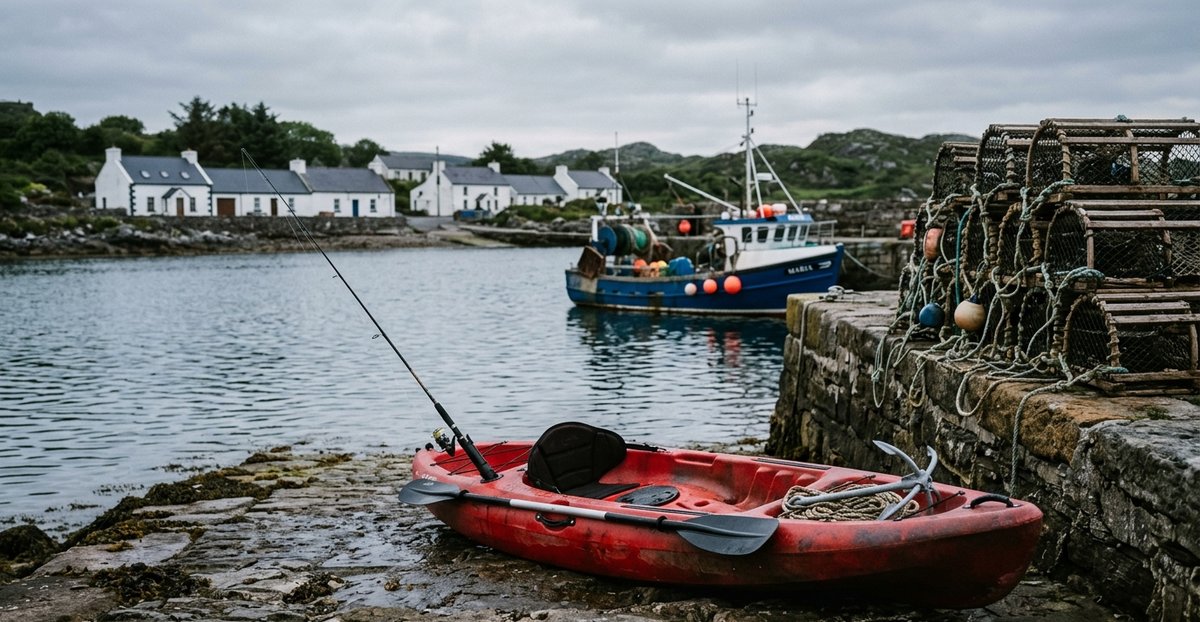
Which lakes work, and what do they ask of you?
Blessington Lake (Pollaphuca) asks for two things from the ESB: a boating licence and a fishing permit. Check the season first. The terms of the 2026 boating licence list the Pollaphuca season as “November – September” (Inniscarra and Assaroe run January to December), which leaves October outside it, so confirm with the ESB before you plan an October trip. The ESB allows boating by licence “(canoe or rowing or sailing boat or a boat with an outboard motor not exceeding 6 horsepower)” (about 4.5 kW) on Pollaphuca, Inniscarra and Assaroe. The licence costs from €25 to €90 depending on the craft, and its order form lists kayak as a boat type. Everyone aboard must wear suitable buoyancy aids or life jackets, you may not launch until your sticker arrives, and the licence forbids fishing without a valid fishing permit. Inflatables and stand-up paddleboards are banned.
Killarney National Park says canoeing or kayaking is allowed on the lakes, but “you will need a permit and you must power-wash your vessel in advance”. It describes Lough Leane as popular for salmon and trout fishing, with “most anglers fishing from their own boats”. Another park page says: “No private boating permits are currently available.” It adds that anyone who wants to join the waiting list should contact the park’s regional manager, so do not plan a Killarney fishing trip until you have a permit in writing. Our Killarney Lakes guide covers the paddling.
On the Shannon and Erne navigations, Waterways Ireland’s 2026 notice tells masters to “monitor and minimise wake, especially near moored vessels, harbours, jetties, and anglers”, and tells paddlers to recognise the limited manoeuvrability of larger vessels. Our Lough Derg route guide covers that water.
In Northern Ireland the rules differ. For Lower Lough Erne, DAERA lists a Game Rod Licence and a Game Fishing Permit for anglers aged 12 and over, a season from 1 March to 30 September, and a bag limit of six brown trout of at least 30 cm. For Upper Lough Erne it lists a Coarse Rod Licence and Coarse Fishing Permit (a game licence and permit if you target trout or salmon), open all year, and says you may retain one pike up to 4 kg and four coarse fish up to 25 cm per day.
Where can you fish the estuaries and the sea?
Pick a slipway you can launch from legally, and read its terms. Wexford County Council’s slipway permit costs “€105 annually (January to January) or €25 daily for combined use at (Kilmore Quay, Wexford, Courtown & Cahore)”. It is available online only, so buy it in advance. Our Wexford guide covers Kilmore Quay and the Saltee Islands, which NPWS says are a Special Protection Area for ten species of breeding seabirds, so keep away from nesting colonies.
At the State’s six fishery harbour centres (Castletownbere, Dunmore East, Howth, Killybegs, Rossaveel and Dingle), the Fishery Harbour Centres (Rates and Charges) Order 2012 fixes the slipway charge for launching and recovering a pleasure craft at €5 per boat per day or €50 per boat per year, except for boats serving swing moorings. We found no later order, but we could not confirm what the Department charges today, so check with the harbour office before you go.
For the Atlantic coast, a guide is a good way to learn the marks, because a local knows the tides, the landings and the species. Our West Cork guide covers Inchydoney and Clonakilty Bay.
Are there guided kayak fishing trips or hire?
Angling Adventures West Cork, based in Clonakilty, is the one kayak fishing guide we could verify on its own site. Discover Ireland’s listing says: “From May to December, weather permitting, kayak fishing is available for individual anglers, using lure or fly fishing methods.” It adds that the guide encourages catch and release, and names bass, pollack, wrasse and mullet. The operator’s pricing page says: “Personalised trips from €130” for beginner-friendly lake fishing trips, with kayaks and fishing equipment provided. It says most of its saltwater guided trips are limited to one angler per session, and it takes bookings through a contact form. We found no separate saltwater price.
Paddle Away, at World’s End in Castleconnell, Co. Limerick, appears in Limerick City and County Council’s listing. It shows single kayak hire from €10 for 45 minutes, pike or trout rod hire from €10 for a day, and “Guided fishing tours: Half day rates from €60 per person.” The listing does not say the tours are by kayak, and we could not load the operator’s own site, so ask before you book. For general hire, see our kayak rental guide.
Is there a club for kayak anglers?
The Irish Kayak Angling Club says it was “Established in 2010” as a volunteer-run club, and that membership is free. It calls itself Ireland’s free online kayak angling club, with its forum as the meeting place. Its home page says: “We use sit on top kayaks.” The home page still carries 2020 announcements, and its competitions and safety pages returned errors when we checked, so confirm the forum is active before you rely on it.
The club runs an All-Ireland competition. A Longford Leader report from September 2024, which we read as an archived copy, listed seven rounds, at Lough Derg, Cahore Beach, Ardglass on Strangford Lough, Culdaff in Donegal, Ballinskelligs Bay in Kerry, Castletownbere in Cork and Dring in Longford. We could not find 2026 dates. The organisers say in the report: “We run a leave no trace policy in the club and do a clean up of every site on the Sunday, 99% leaving places cleaner than what they were.” An archived copy of the club’s safety page from March 2025 advises a wetsuit or preferably a drysuit and a personal flotation device. That is club advice, not law.
Common Mistakes When You Start Kayak Fishing
- Treating “no licence” as “no rules”. Sea angling needs no licence for almost all species, but the pollack limit has applied since 1 June 2026 and bass has its own limits.
- Quoting the EU maximum for bass. The EU allows up to three a day in 2026, but IFI’s page lists two. Keep to IFI’s figure and check it again before you keep a fish.
- Keeping a pike over 50 cm, or a fish hooked outside the mouth. IFI’s summary of the bye-laws says both are prohibited.
- Skipping the permit. Blessington needs an ESB boating licence and a separate fishing permit, and a permit does not cover a closed season.
- Taking an inflatable onto an ESB reservoir. The ESB prohibits any type of inflatable craft.
- Taking the lifejacket off when you drift or anchor. The regulation exempts only a craft made fast to the shore or at anchor, and the Department recommends a lone person keeps it on even then.
- Anchoring by the stern. The Code of Practice warns that it may result in swamping and capsize, especially in a current.
- Going out in wind force 4 or above without the skills. The Code says that should only be considered for the very experienced.
- Trusting a retailer’s guide or a forum for the rules. Use IFI, the bye-law or the water’s owner.
Frequently Asked Questions
Do you need a licence to fish from a kayak in Ireland? Not for sea angling in almost all species, and not for trout, pike or coarse fish, according to IFI. You do need a state licence for salmon and sea trout, which costs €36 for a day, €50 for 21 days or €100 for the year in 2026. Many waters also need a local permit, and some, such as Blessington, need a boating licence too.
How many pollack and bass can you keep? From 1 June 2026 you may take and kill no more than three pollack in any 24 hours, and must return the rest. For bass, IFI’s 2026 entry allows catch and release only in February and March, and two a day with a 42 cm minimum in the rest of the year. The EU’s 2026 rule allows up to three, but it leaves stricter national limits in place, so keep to two and check with IFI before you keep a bass.
Do you have to wear a lifejacket when fishing from a kayak? Yes, whenever you are under way. S.I. 921 of 2005 requires a suitable personal flotation device on a craft under 7 metres, except when it is made fast to the shore or at anchor. The Department of Transport’s Marine Notice recommends that anyone alone on board keeps it on at anchor too, and so do we.
What is the best kayak for fishing in Ireland? We cannot name one best kayak, because it depends on the water and the budget. All nine models in our price table are sit-on-tops, and the retailers list rod holders or accessory rails on most of them. Inflatables are banned on the ESB reservoirs at Blessington, Inniscarra and Assaroe, and the Code says inflatable kayaks are not suitable for sea kayaking. Check the capacity against your own weight and gear.
How much does a fishing kayak cost in Ireland? The prices we found on 4 October 2026 started at €764 for a paddle sit-on-top (the Moken 10 Lite, which showed no stock) and ran to €3,750 for a high-end hull with pedal drive. Skipjak lists a FishJak 10 at €699 but showed it as unavailable. Pedal models started at €1,599 in our table. Stock and prices change, so check with the retailer.
Can you kayak fish at sea in Ireland? Yes, but the Code of Practice says kayaking in wind force 4 or above (about 20 to 30 km/h) should only be considered by the very experienced, and it recommends sea kayak training and joining a club. We found no official distance limit. Stay within easy reach of a landing place, avoid offshore winds, and read our sea kayaking guide first.
Where can beginners try kayak fishing in Ireland? A guided trip is the simplest start. Angling Adventures West Cork lists beginner-friendly lake trips from €130, with kayaks and equipment provided. The Irish Kayak Angling Club says membership is free and uses a forum, although its home page still carries 2020 announcements. Our beginners’ guide covers the basic skills first.
Also Read
- Best Kayak for Irish Waters: Buyer’s Guide — sea, touring and river kayaks compared.
- Kayaking Safety in Ireland: Essential Tips & Rules — the safety basics before any trip.
- Kayak Trolley Ireland: Buyer’s Guide — getting a heavy fishing kayak to the water, and anchor trolleys.
- Sea Kayaking Ireland: The Complete Guide — conditions, gear and what to wear at sea.
- Kayaking for Beginners in Ireland — the skills to learn before you add a rod.

No comments yet on this guide.
Be the first to share your experience — conditions, access, hazards, or anything a future paddler should know.
Login to join the discussion