Ireland’s coastline is world-class, offering everything from serene bays in West Cork to the towering sea cliffs of Donegal. But the Atlantic Ocean commands respect. Whether you are navigating the intricate tidal races of the Wild Atlantic Way or enjoying a quiet paddle on the River Shannon, proper safety preparation is the difference between an unforgettable adventure and an emergency call to the Coast Guard.
In this comprehensive guide, we break down essential sea kayaking safety tips for coastal paddling, what you need to know about Irish weather systems and the Beaufort scale, the crucial rescue techniques you must learn, and a detailed cost breakdown of the essential safety gear you should never leave shore without.
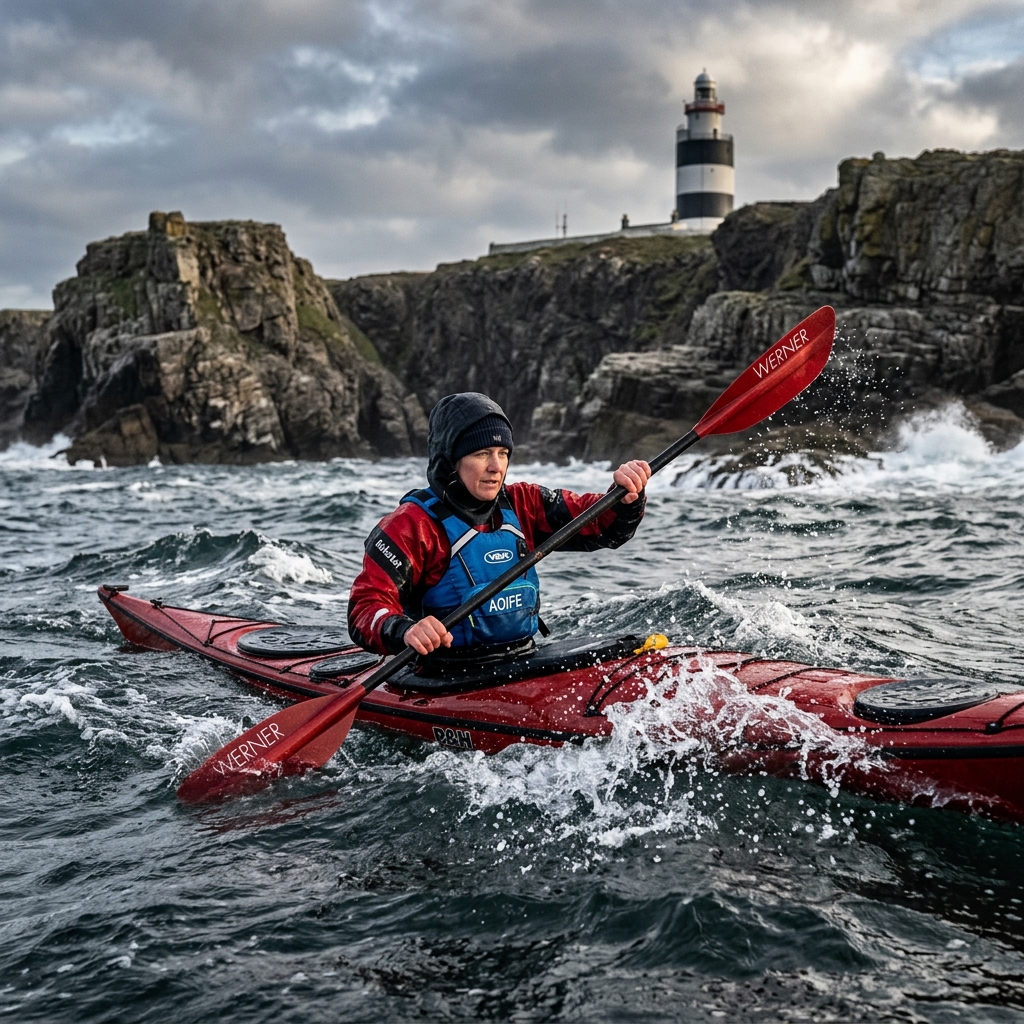
1. Why Kayaking Safety Matters in Ireland
The Irish maritime environment is uniquely dynamic. Unlike the warm, predictable waters of the Mediterranean, the North Atlantic is dominated by fast-moving low-pressure systems. You can launch your kayak under clear blue skies in the morning, only to be met by a howling Force 5 gale and a two-metre swell by mid-afternoon.
Water temperature is another critical factor. The waters surrounding Ireland peak at roughly 14°C to 16°C in late August and drop to a bone-chilling 8°C in February. Without the right thermal protection, sudden immersion can trigger cold water shock—a physiological response that causes involuntary gasping and rapid heart rate, which is a leading cause of drowning.
Safety in Ireland is not just about having the right gear; it is about having the right judgment, the right skills, and a deep respect for the elements.
2. Who Should Paddle Where? Assessing Your Skill Level
Before you worry about tides or marine VHF radios, you must honestly assess your own paddling ability. The Canoeing Ireland skills certification system provides an excellent framework for matching your ability to the environment. The wind and location guidance below is WaterEgo’s own general guidance based on that framework, not the official award syllabus, so check Canoeing Ireland’s current award conditions before you rely on it.
Level 1 and Level 2: The Novice
If you have just bought a sit-on-top kayak or have only paddled a few times, you are a novice.
- Where to paddle: Very sheltered, enclosed bays (like the inner parts of Bantry Bay), slow-moving canals (like the Royal Canal), and calm lakes on days with very little wind.
- Conditions: Wind Force 1 to 2. No noticeable tidal currents.
- Rule: How far you can safely go from shore depends on your ability, your rescue plan, who you are paddling with, the conditions on the day, and the kayak you are in, not a fixed distance you could swim.
Level 3: The Intermediate Coastal Paddler
At this level, you can reliably perform a self-rescue or assist a friend in deep water, and you understand basic navigation and weather reading.
- Where to paddle: Coastal journeys along the Wild Atlantic Way or the Irish Sea coast, but avoiding major headlands and strong tidal races.
- Conditions: Up to Wind Force 3, occasionally Force 4 if you are highly experienced in your group.
- Rule: You are now a self-sufficient part of a group, carrying your own safety gear and capable of navigating using a chart and compass.
Level 4+: The Advanced Sea Kayaker
You have mastered the Eskimo roll, can tow an injured paddler in rough water, and understand complex tidal planning.
- Where to paddle: Open crossings, committing cliff coastlines, and tidal races (like the treacherous waters around Malin Head).
- Conditions: Up to Wind Force 4 and Force 5.
3. When to Go: Reading the Weather and Tides
In Ireland, general weather apps on your phone are not enough for coastal kayaking. You must use the Met Éireann Marine Forecast.
Wind Speed and Direction
The most critical factor is the wind. Offshore winds (winds blowing from the land out toward the sea) are incredibly dangerous, particularly for beginners on sit-on-top kayaks. An offshore wind flattens the waves near the shore, making the water look deceptively calm. Once you paddle out past the shelter of the land, that same wind will catch your kayak and blow you rapidly out to sea.
The Beaufort Scale
Understand how wind force translates to water conditions. If Met Éireann issues a Small Craft Warning (Force 6 or higher expected within 10 nautical miles of the coast), do not go out. It is not a legal restriction on kayakers, but experienced Irish paddlers and clubs treat it as a hard limit, and so should you.
| Beaufort Force | Wind Speed (knots) | Sea State | Recommendation for Kayakers |
|---|---|---|---|
| Force 1-2 | 1 – 6 knots | Calm, glassy, small ripples | Comfortable for most kayaks in sheltered water, but still check fetch and tide before you launch. |
| Force 3 | 7 – 10 knots | Gentle breeze, small wavelets | Manageable for touring and sea kayaks with the right skills. Harder work in a sit-on-top, especially in open water. |
| Force 4 | 11 – 16 knots | Moderate breeze, frequent whitecaps | Best suited to Level 3+ paddlers in sea kayaks. Fetch, swell and exposure still decide whether it is actually safe. |
| Force 5+ | 17+ knots | Fresh breeze, large waves, spray | Stay ashore. Even experienced paddlers treat this as a limit. |
Wind force alone does not decide whether it is safe to paddle. Fetch, swell, tide, exposure and your own skill level all matter just as much, so read the full marine forecast, not just the wind force.
Understanding Tides and Currents
The Irish coast is subject to significant tidal ranges (the difference between high and low tide).
- Spring vs. Neap Tides: Spring tides occur around the full and new moon, causing the highest high tides and lowest low tides, resulting in much faster water movement. Neap tides (half-moon) generally move slower, but a neap tide combined with strong wind or a narrow channel can still be dangerous, so do not treat neap as automatically safe.
- Tidal Races and Overfalls: Around headlands, water is forced through narrow channels, creating extremely turbulent conditions known as tidal races. Always consult a tidal atlas before rounding major headlands.
- The Rule of Twelfths: This is a rough method for estimating tide height through the cycle, not current speed, and it does not hold everywhere on the Irish coast. Check a local tidal atlas or current prediction for your actual launch site rather than relying on this rule alone.
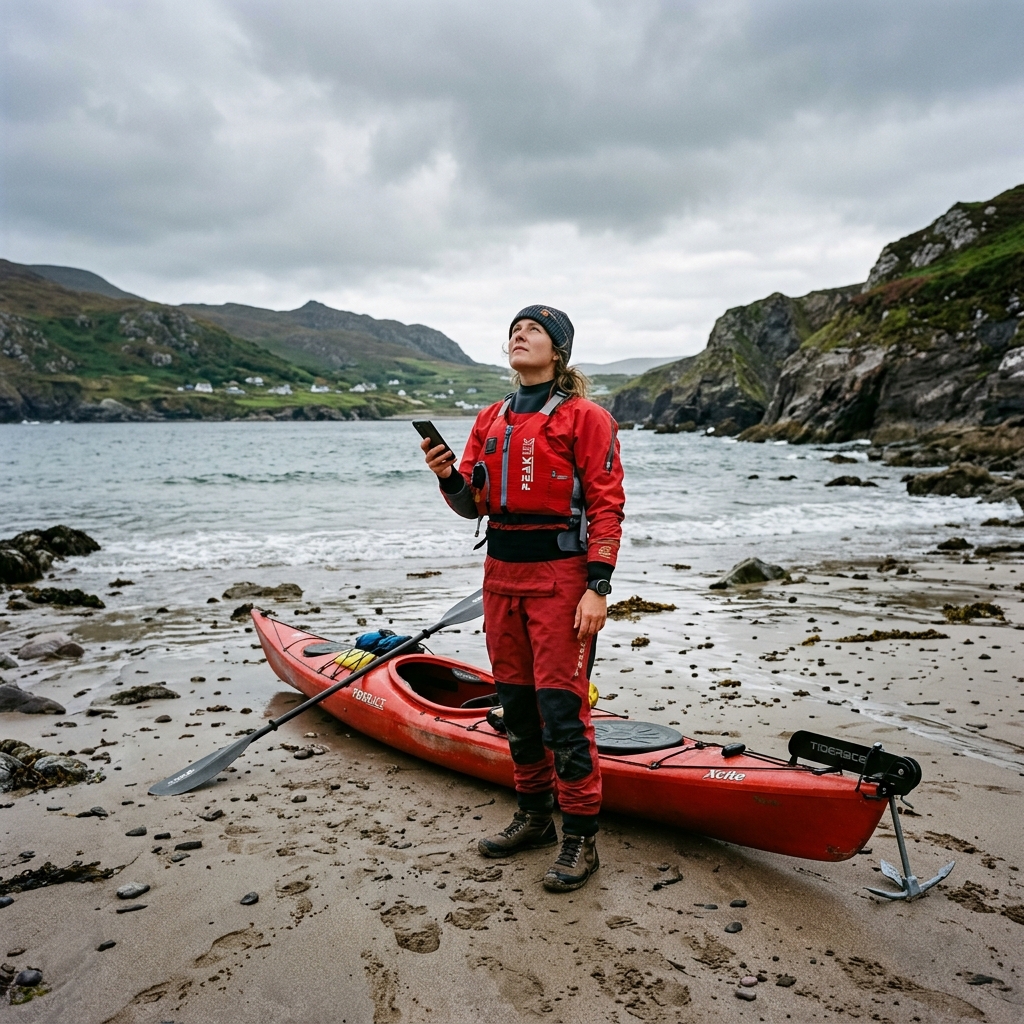
4. How to Execute Essential Rescues
Safety gear is useless if you do not know how to use it. Every paddler must practice these basic techniques in calm, controlled conditions before they are ever needed in a real emergency.
Step-by-Step T-Rescue (Assisted Rescue)
If a paddler capsizes and exits their boat, a T-Rescue is the standard method to get them back in. What follows is a brief overview, not enough instruction on its own: practise the full technique repeatedly with a qualified instructor before you rely on it in open water.
- Stabilize: The rescuer paddles to the inverted kayak and stabilizes it.
- Empty the Water: The rescuer pulls the bow of the capsized kayak across their own deck to form a “T” shape, lifting it to drain the water from the cockpit.
- Right the Boat: The rescuer flips the empty kayak upright and slides it back into the water, parallel to their own boat.
- Re-entry: The rescuer holds the two kayaks tightly together for stability while the swimmer hoists themselves back into their cockpit.
Step-by-Step Emergency Call
If you cannot resolve a situation yourself, you must call for help immediately. Delaying a call can turn a difficult situation into a fatal one. MAYDAY is reserved for grave and imminent danger to life, not general difficulty. If you have phone signal, calling 112 or 999 and asking for the Coast Guard is an equally valid way to raise the alarm.
- Switch to Channel 16: Turn on your marine VHF radio and select Channel 16 (the international distress frequency).
- Transmit MAYDAY: Press the transmit button and say clearly: “MAYDAY, MAYDAY, MAYDAY. This is kayak [Your Name/Callsign].”
- State Your Position: Give your exact GPS coordinates or a very precise geographical location (e.g., “Two miles south of Fastnet Rock”).
- State Your Emergency: Explain the problem (e.g., “One paddler in the water, unable to re-enter kayak, drifting offshore”).
- Listen: Release the button and wait for the Coast Guard to acknowledge. Follow their instructions.
5. Inland Hazards: Rivers and Lakes
While the sea poses obvious dangers, Ireland’s inland waterways have their own unique hazards that demand respect.
River Hazards
- Weirs: Artificial dams (weirs) are common on Irish rivers like the Liffey and the Boyne. They can create a “stopper” or “hydraulic” at the base—a recirculating current that can trap a kayak and a swimmer indefinitely. Always portage (carry your kayak around) weirs. Some weirs are lethal even for highly experienced paddlers, so treat each one on a route-specific basis and get local advice before assuming any weir can be run.
- Strainers: A tree fallen into a fast-moving river acts like a sieve. The water flows through the branches, but a kayak (or a person) will be pinned against it by the immense force of the water.
Lake Hazards
- Fetch: Large Irish lakes, like Lough Derg or Lough Corrib, can become incredibly rough. “Fetch” is the distance wind travels over open water. A Force 4 wind blowing across 10 miles of open lake will create steep, dangerous waves that mimic the open sea.
- Boat Traffic: Large lakes and navigations (like the Shannon) have heavy cruiser traffic during the summer. Follow Waterways Ireland’s posted speed limits, which are set lower on narrow river and canal sections partly because paddlers use them, and make yourself visible with bright clothing so passing boats see you in good time.
6. What to Avoid: Common Paddling Mistakes
Many rescues carried out by the RNLI and the Coast Guard around Ireland stem from the exact same preventable mistakes.
- Going Out Alone: Paddling solo increases your risk exponentially. If you capsize or suffer a medical emergency while alone, there is nobody to perform a rescue or call for help. Always paddle in a group of at least three if heading to the coast.
- Ignoring the Offshore Wind: We cannot stress this enough. If the wind is blowing from the beach out to sea, inexperienced paddlers must stay ashore.
- Wearing Cotton: Cotton absorbs water and pulls heat away from your body, drastically accelerating hypothermia. Always wear synthetic layers (polyester, nylon, fleece) or a dedicated wetsuit.
- Not Carrying a Means of Calling for Help: A mobile phone in a dry bag is good, but it relies on cell reception. A waterproof VHF radio is a lifeline.
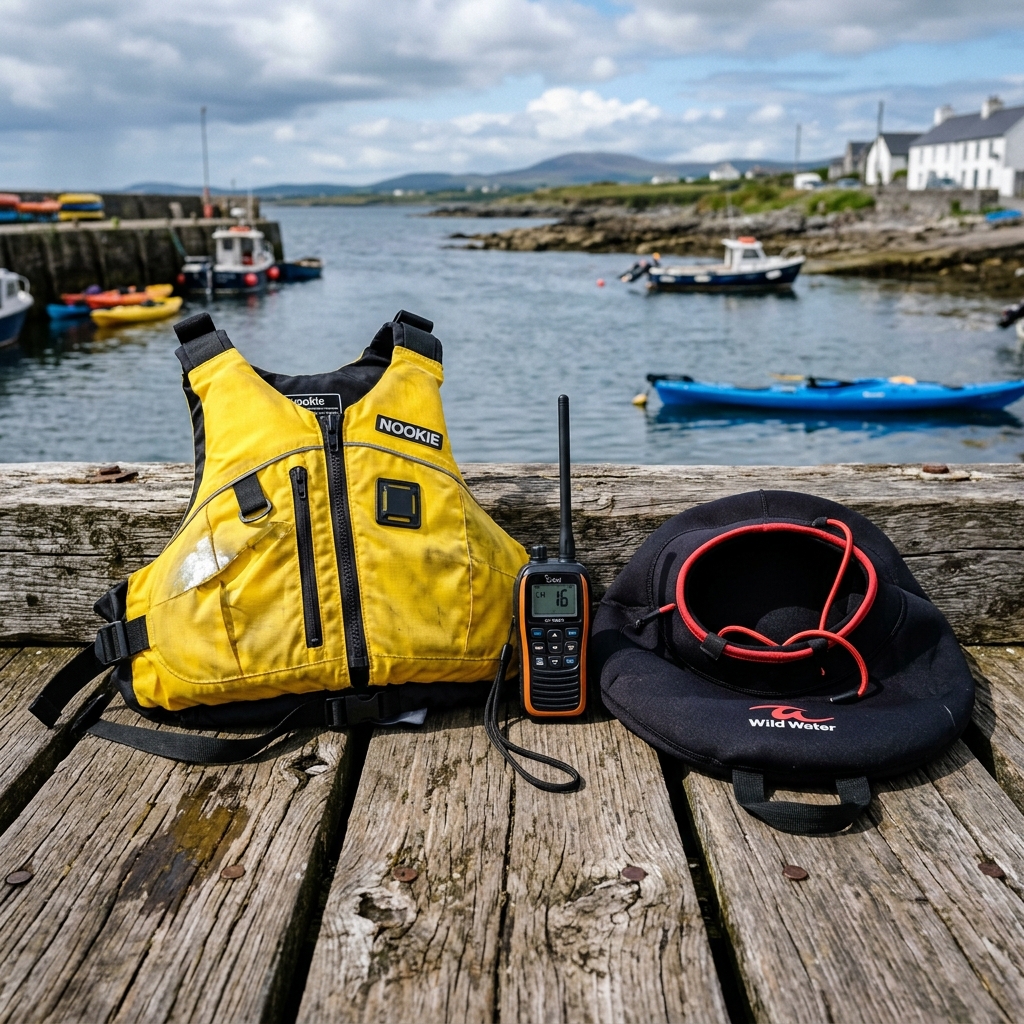
7. Financial Breakdown: The Cost of Safety
Safety gear is not an area where you should cut corners to save money. When buying your kayaking kit, you must budget for these essential items.
Here is a realistic breakdown of what you can expect to pay for high-quality, reliable safety gear from a reputable Irish marine retailer in 2026:
A Personal Flotation Device (buoyancy aid) is non-negotiable. Under Irish law, it is not enough to simply have a buoyancy aid on board — the Pleasure Craft (Personal Flotation Devices and Operation) (Safety) Regulations 2005 require anyone on an open craft under 7 metres, which covers every kayak, to actually wear a suitable PFD at all times while afloat.
8. What Comes Next: Training and Development
The most important piece of safety equipment you can bring on the water is your own brain. No amount of expensive gear will save you if you lack the skills and judgment to use it properly.
If you are serious about kayaking safely in Ireland, your absolute next step is to seek out formal training.
- Take a Course: Book a Level 2 or Level 3 Skills course with a Canoeing Ireland approved provider. These weekend courses are the most efficient way to learn proper stroke technique and essential rescue skills.
- Join a Club: Ireland has a fantastic network of kayaking clubs. Joining a club gives you access to experienced mentors, pool sessions over the winter where you can practice rescues in warm water, and organized group trips that dramatically increase your safety on the water.
Frequently Asked Questions
Is it a legal requirement to wear a lifejacket when kayaking in Ireland? Yes. Under Irish law, anyone on an open craft less than 7 metres in length (which includes all kayaks) must wear a suitable Personal Flotation Device (PFD) or lifejacket at all times while afloat, not merely carry one on board. This is a legal requirement set out in the Pleasure Craft (Personal Flotation Devices and Operation) (Safety) Regulations 2005, not just a strong recommendation.
Do I need a license for a VHF marine radio? Yes. To legally operate a marine VHF radio in Ireland, you must hold a Short Range Certificate (SRC), which requires passing a short training course. You also need a ship radio licence for the vessel’s radio itself, issued by the Department of Transport’s Maritime Radio Affairs Unit — ship radio licensing was transferred out of ComReg’s remit back in 2007, so ComReg is not the right body here.
What is the best way to check the weather before kayaking? Always use the Met Éireann Marine Forecast. Look specifically for the Sea Area Forecast if you are paddling on the coast, and pay close attention to any Small Craft Warnings.
Are sit-on-top kayaks safer than sit-in kayaks? Neither type is generally safer. Sit-on-top kayaks are easier for absolute beginners because if you fall off, you just land in the water, with very little risk of being trapped inside, though their higher profile can be harder to control in strong wind. Sit-in kayaks sit lower and can handle wind and waves more efficiently, but getting back in after a capsize takes more practice. Which one is safer for you depends on your skill level, the conditions, how well the kayak fits, and whether you can rescue yourself in it.
What should I wear for kayaking in Ireland? Dress for the water temperature, not the air temperature. Even in August, Irish waters are cold. What you need depends on the water temperature, the conditions, how long you will be out, and how likely you are to end up in the water. A wetsuit is a common choice for shorter trips in sheltered water, while paddlers doing longer or more exposed coastal journeys often invest in drysuits, worn over thermal fleece layers. Never wear cotton.

No comments yet on this guide.
Be the first to share your experience — conditions, access, hazards, or anything a future paddler should know.
Login to join the discussion