Kayaking the Causeway Coast is a journey into geological history. This dramatic stretch of Northern Ireland is battered by the Atlantic Ocean, creating towering cliffs, deep sea caves, and the world-famous hexagonal basalt columns of the Giant’s Causeway.
For the experienced sea kayaker, it is one of the premier coastal routes in Europe. For the beginner, it is an environment that commands absolute respect and the guidance of a local expert.
Why Kayak the Causeway Coast?
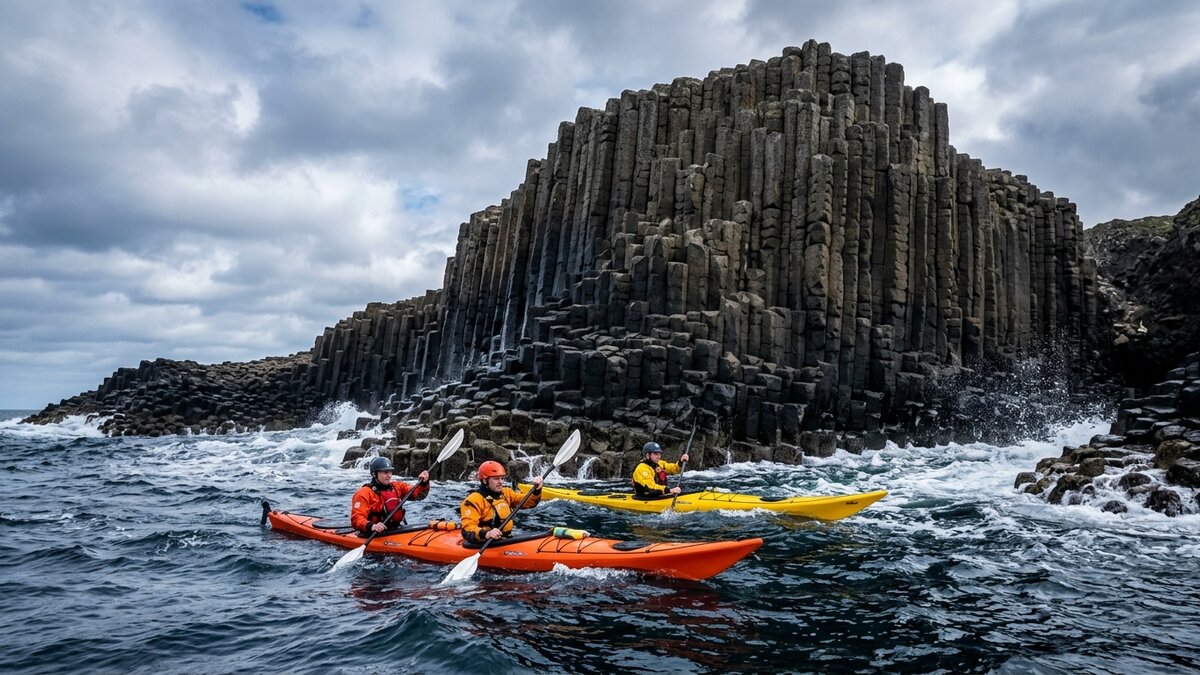
Viewing the Causeway Coast from the water is a completely different experience than walking the cliff paths. From the cockpit of a kayak, the scale of the Giant’s Causeway becomes truly apparent as the 40,000 interlocking basalt columns rise directly out of the swell.
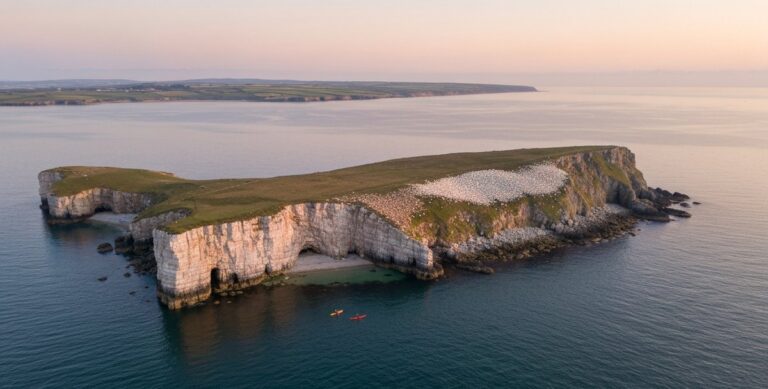
Beyond the Causeway, this coastline is riddled with massive sea caves, hidden coves, and iconic landmarks like Dunluce Castle, which clings precariously to the cliff edge. Paddlers often encounter dolphins, porpoises, and extensive seabird colonies nesting in the limestone cliffs at Whiterocks.
Who Should Paddle Here?
The Causeway Coast is completely exposed to the open Atlantic Ocean. There is very little shelter once you leave the harbours.
For Independent Paddlers (Expert Only)
Independent paddling here is strictly for advanced sea kayakers with robust rough-water skills. You must be comfortable in dynamic ocean swells, have a reliable roll, and possess excellent coastal navigation skills. If the wind turns offshore (blowing from land to sea), the conditions can become life-threatening very quickly.
For Beginners and Intermediates (Guided Only)
If you do not have advanced sea kayaking qualifications, you must book a guided tour. Local operators provide stable sit-on-top or double sea kayaks and, most importantly, the vital local knowledge required to read the swell and safely enter the sea caves.
Top Launch Spots and Routes
The rugged nature of the coast means access points are limited to specific harbours and sheltered beaches.
Ballintoy Harbour
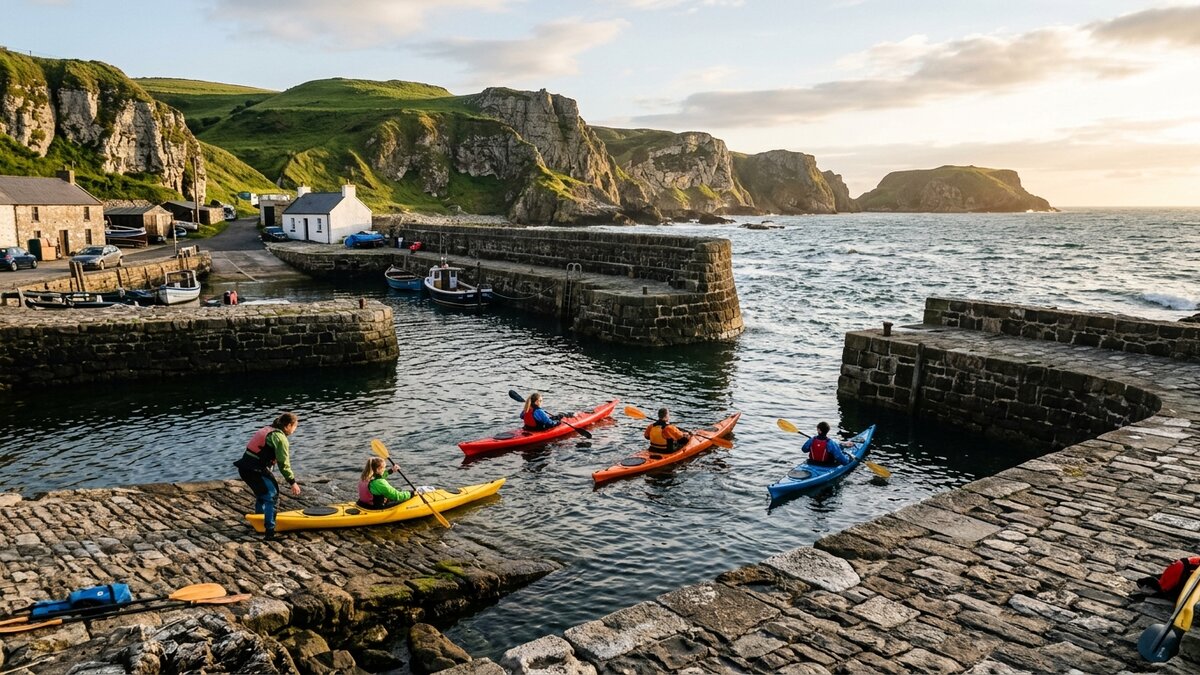
Ballintoy Harbour is arguably the most picturesque launch spot in Northern Ireland. Surrounded by limestone cliffs and scattered rock formations, the harbour itself is sheltered, making it a common starting point for local tours. From here, paddlers can explore the nearby smugglers’ coves or paddle east towards the Carrick-a-Rede Rope Bridge.
Ballycastle
Ballycastle offers a larger, more commercial harbour and is a major hub for sea kayaking tours. From Ballycastle, strong paddlers can head west towards Kinbane Castle or even plan an open-water crossing to Rathlin Island (a route exclusively for elite sea kayakers due to the treacherous tidal races in Rathlin Sound).
Portrush and Whiterocks
For those looking for slightly more sheltered conditions or kayak surfing, the beaches around Portrush and the Whiterocks cliffs are highly popular. The limestone cliffs here are softer than the basalt further east, resulting in spectacular sea arches and deep caves.
Navigating Sea Caves Safely
The sea caves along the Causeway Coast are massive and tempting, but they are also highly dangerous.
Never enter a sea cave without first sitting outside and observing the swell for several minutes. Ocean swells travel in sets. A cave that looks calm might fill to the roof when a larger set of waves rolls in. Once inside, the water pushes against the back wall and rebounds, creating highly turbulent, chaotic water. If you are not completely confident in your boat control, admire the caves from the outside.
Weather and Atlantic Swell
The weather on the Causeway Coast dictates everything. Summer offers the most reliable paddling windows, but the Atlantic swell is ever-present.
| Condition | Hazard Level | Action Required |
|---|---|---|
| Onshore Wind (Blowing onto land) | Medium to High | Creates surf on beaches; makes launching difficult. Risk of being pushed into cliffs. |
| Offshore Wind (Blowing out to sea) | Extreme | Deceptive. Water looks flat near shore, but wind will blow you out to the open Atlantic. Do not paddle. |
| High Atlantic Swell (Over 1.5m) | High | Sea caves and cliff bases become death traps due to rebounding waves (clapotis). |
How to Prepare and What to Bring
Cold water shock is a significant risk in the Atlantic Ocean, where temperatures rarely exceed 15 degrees Celsius even in late summer.
If you are paddling independently, a drysuit or a thick winter wetsuit (minimum 4mm/3mm) is essential. A high-visibility kayaking helmet is mandatory, especially if you plan to get close to the cliffs or enter caves where rockfall or capsizing into the cave walls is a risk. Always carry a marine VHF radio; mobile phone coverage is notoriously patchy at the base of the cliffs.
Local Tour Operators and Guides
Booking a guide is the best way to experience the Causeway Coast without the stress of ocean navigation.
Operators like Causeway Coast Kayaking Tours run daily trips during the summer season. They provide all the heavy cold-water gear, stable kayaks, and the expertise needed to time the tides and safely explore the sea caves. A guided tour is also the best way to learn about the history of the smugglers’ coves and the geology of the basalt columns.
What Can Go Wrong (Risks)
The Atlantic Ocean does not forgive mistakes.
The primary risk is misjudging the weather, specifically offshore winds. Paddlers have been blown out to sea because the water close to the shore looked deceptively calm. The secondary risk is entering sea caves on a rising swell. If you capsize inside a cave, the churning water makes self-rescue exceptionally difficult, and the sharp volcanic rocks will cause severe injury.
Costs and Budgeting
Independent paddlers only pay for parking, but the cost of a guided tour is the price of safety and access for everyone else.
Causeway Coast Kayaking Tours, based at Ballintoy Harbour, run the main guided trips on this stretch of coast: a 30-minute taster session, a 1-hour family package, a 2-hour Rope Bridge Tour, and a half-day private guided tour with lunch. None of these are priced on the operator’s own site — pricing is only shown once you start a booking through their FareHarbor system, so check current rates there before you travel rather than relying on a fixed figure here. Wetsuits, buoyancy aids, and helmets are included with every guided tour.
5 Frequently Asked Questions
1. Can I kayak directly to the Giant’s Causeway?
Yes, but you cannot land directly on the stones. You can paddle past the columns for spectacular photos, but the waters around the Causeway are exposed and often turbulent.
2. Do I need to be fit to kayak the Causeway Coast?
For a guided two-hour tour, average fitness is sufficient as the guides pace the trip to the group. Independent paddling here requires excellent physical conditioning to fight tides and wind.
3. Are the sea caves safe for beginners?
Only when accompanied by a professional guide who knows the swell patterns. You should never enter a sea cave alone if you are a beginner.
4. What is the water temperature?
The Atlantic water here is cold year-round. It peaks at around 14 to 15 degrees Celsius in August and September and drops to 8 degrees in the winter.
5. Can I rent a kayak and go out alone?
Most reputable rental operators on the Causeway Coast will not rent kayaks for independent use without strict vetting of your sea kayaking qualifications (e.g., a Canoeing Ireland Level 4 Sea Kayak Skills Award or equivalent).

No comments yet on this guide.
Be the first to share your experience — conditions, access, hazards, or anything a future paddler should know.
Login to join the discussion