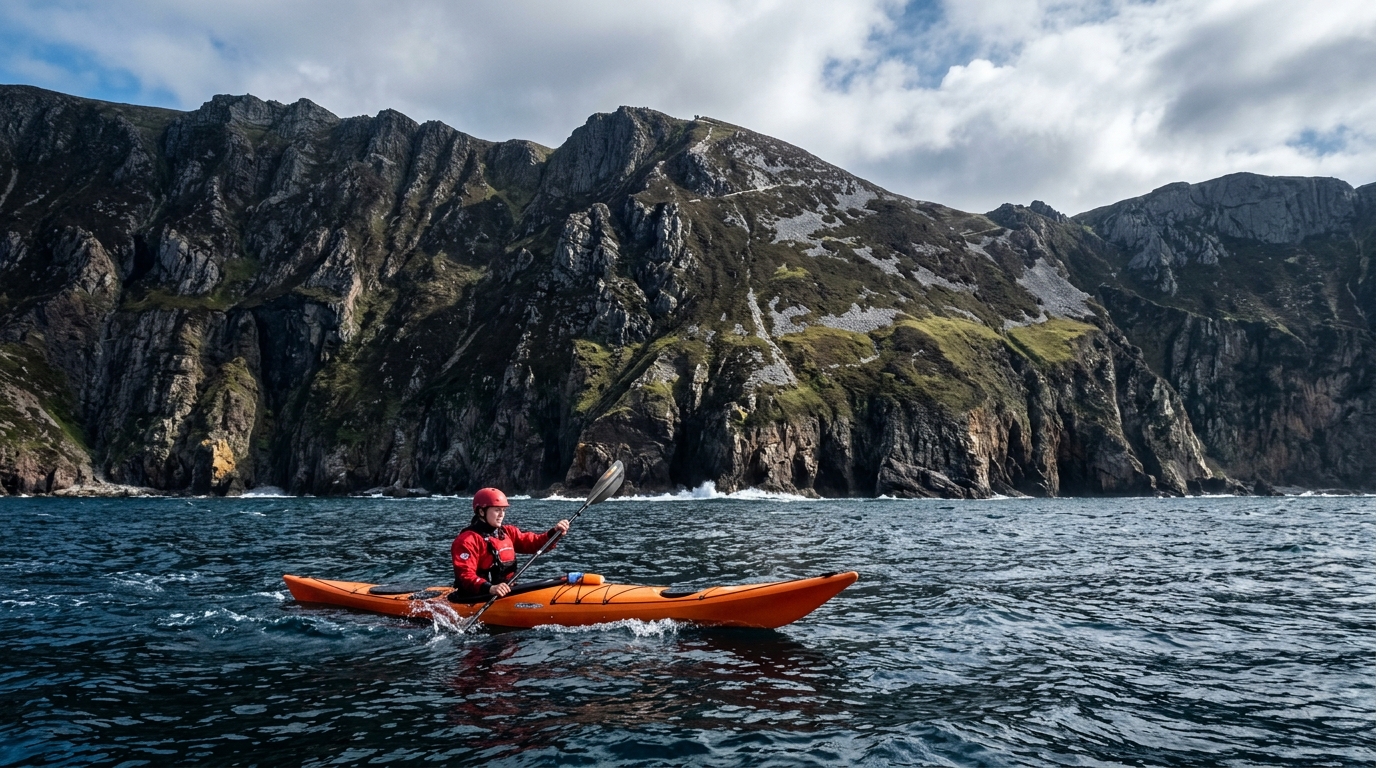
Donegal offers some of the most dramatic coastal kayaking in Europe. The county has the longest mainland coastline in Ireland, and it divides neatly into two worlds: the exposed Atlantic edge at Slieve League and Horn Head, where 600-metre sea cliffs plunge directly into the ocean, and the deeply sheltered sea loughs of Mulroy Bay and Sheephaven Bay, where the water is usually far calmer than the open coast, though wind direction and swell still matter. This guide tells you which is which, where to launch, and what the North Atlantic actually demands of you.
Whether you are an experienced sea kayaker chasing the Slieve League sea caves or a beginner looking for a safe sheltered bay, this is the complete independent guide to kayaking in Donegal.
Why Donegal is Ireland’s Ultimate Wild Coast
Donegal is the northernmost county in the Republic of Ireland, boasting the longest mainland coastline in the country. It is fully exposed to the Atlantic Ocean, meaning it takes the full brunt of winter swells, but also provides world-class sea kayaking when conditions settle.
The sheer scale of the landscape sets it apart. You will find sea cliffs rising hundreds of metres straight out of the water, massive sea arches, and a labyrinth of sea caves that rival any found further south in Kerry or Cork. The water is undeniably cold—averaging around 8°C in winter and around 15°C in late summer—so proper thermal protection is mandatory year-round.
However, you don’t need to be an expert sea kayaker to paddle here. Donegal has deep, sheltered inlets that offer far more protection than the open ocean, though you still need to check wind, tide, and forecast before you launch. Knowing exactly where to go based on the Beaufort scale forecast is the key to a successful trip.
4 Best Kayaking Zones in Donegal
To plan your trip, it helps to divide the county into four distinct paddling zones, ranging from highly exposed expert routes to sheltered bays and sea loughs well suited to families and beginners in calm, settled conditions.
Top Kayaking Zones at a Glance
| Zone | Best For | Exposure Level | Key Highlight |
|---|---|---|---|
| Slieve League | Advanced paddlers | Extremely Exposed | 600m sea cliffs & caves |
| Dunfanaghy | Intermediates | Moderate / Mixed | Estuary & nesting seabirds |
| Mulroy Bay | Beginners / Families | Very Sheltered | Calm sea lough waters |
| Inishowen | Experts (Malin Head) | High | Fierce tidal streams |
1. Slieve League (Sliabh Liag) and the Sea Caves
Best for: Advanced sea kayakers looking for dramatic scenery.
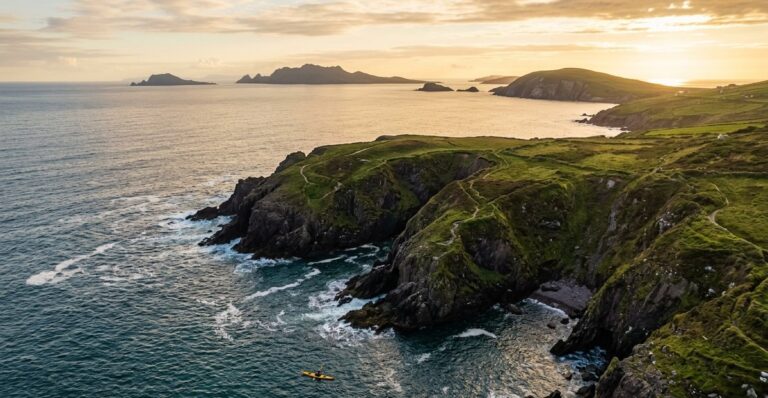
The Slieve League cliffs are among the highest sea cliffs in Europe, towering nearly 600 metres above the Atlantic. Kayaking beneath them puts their immense scale into perspective. This entire stretch of coastline from Teelin to Glencolmcille is a maze of towering stacks and deep sea caves.
The launch point is usually at the slipway in Teelin Pier (there is free parking, though it gets very busy in peak summer). From here, you paddle out of the sheltered harbour and turn west along the coast.
This is a highly committing route. There are very few places to land if the weather turns, and the ocean swell bouncing off the sheer cliffs creates chaotic clapotis (reflected waves). This zone is strictly for experienced paddlers in dedicated sea kayaks, paddling as a group with VHF radios and proper rescue training. If you lack this experience, several local operators run guided tours of the caves from Teelin.
2. Dunfanaghy and Horn Head
Best for: Intermediate paddlers seeking a mix of shelter and open sea.
Dunfanaghy, located on the northern coast, offers a brilliant base camp. The town sits on an estuary that fills and empties rapidly with the tide.
For a sheltered paddle, you can launch near the town at high tide and explore the calm waters of the estuary and Portnablagh harbour just to the east. The water here is generally flat, making it ideal for sit-on-top kayaks and touring kayaks on settled days.
For advanced paddlers, the route from Dunfanaghy out and around Horn Head is spectacular. The cliffs at Horn Head rise steeply, and the area is a designated Special Protection Area for breeding seabirds. You can see puffins, guillemots, and kittiwakes nesting on the ledges during the summer months. Like Slieve League, this open-sea route requires absolute respect for the Atlantic swell and tidal streams.
3. Mulroy Bay and Sheephaven Bay
Best for: Beginners, families, and windy days.
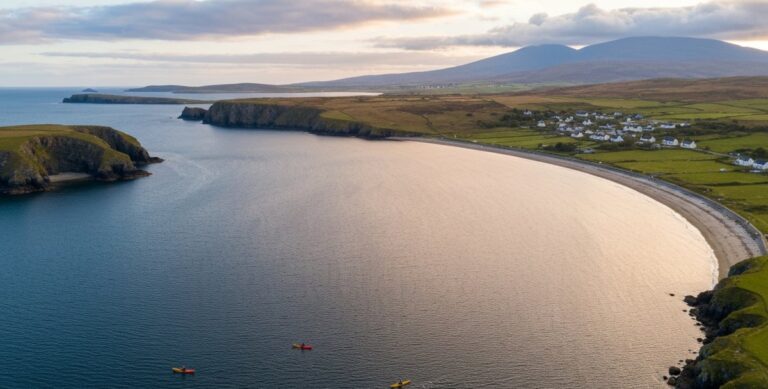
When the open ocean is blowing a gale, Mulroy Bay is the sanctuary you need. It is a long, winding sea lough that bites deeply into the Donegal landmass. Because it is so sheltered, the water is usually far calmer than the open coast, making it one of the more forgiving places to kayak in Donegal, though wind and tide still need checking before you launch.
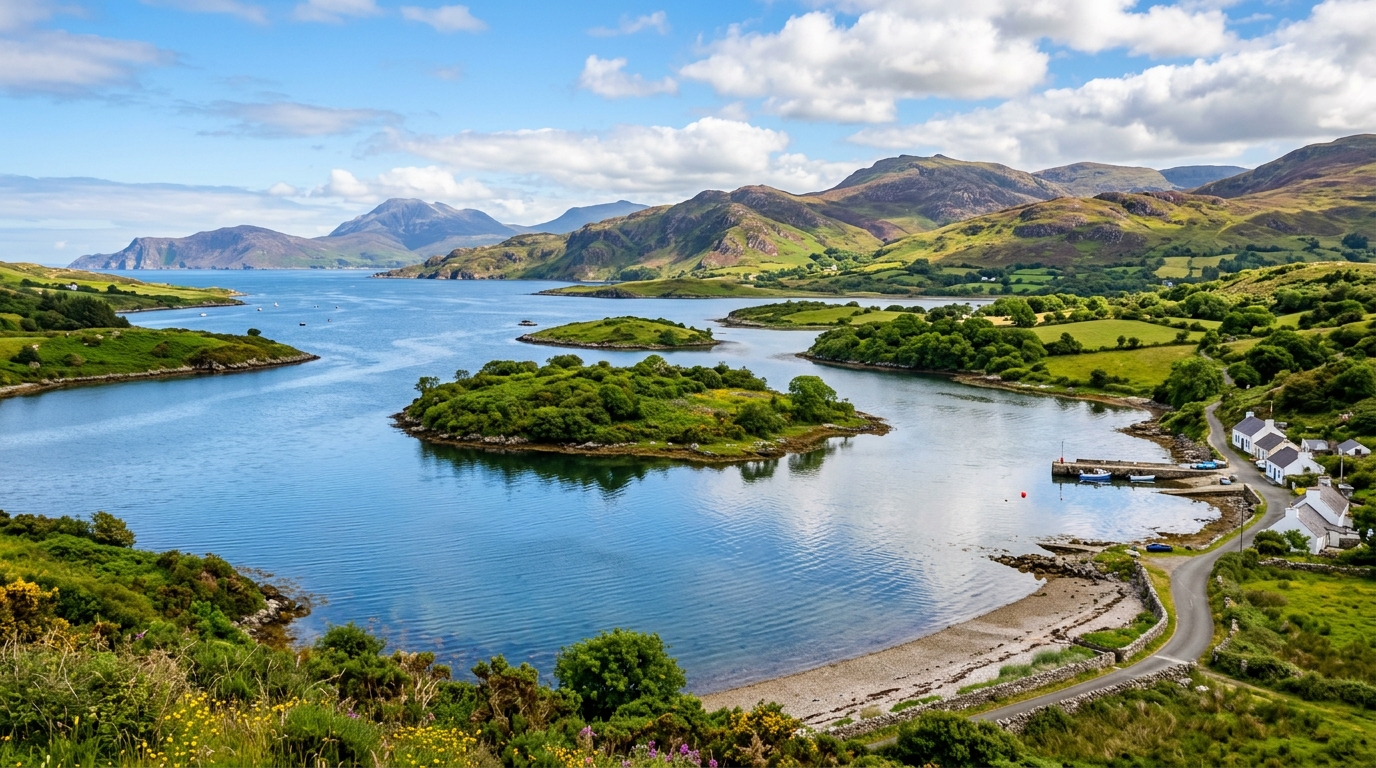
You can launch from the slipway near Cranford or from Woodquarter Pier. The bay is dotted with small islands and aquaculture farms. The tidal flow can be strong at the narrow entrance to the bay, but once inside, the currents are manageable. This is a great spot for sheltered sea kayaking, stand-up paddleboarding, and family days out on the water.
Sheephaven Bay, just to the west, is wider and more exposed but still offers more protection than the open Atlantic. Doe Castle sits on the edge of the bay, providing a stunning historic backdrop as you paddle past.
4. Inishowen Peninsula and Malin Head
Best for: Experienced paddlers wanting to reach the extreme north.
The Inishowen Peninsula is the northernmost part of Ireland. Malin Head, its tip, is notorious for fierce weather and roaring tidal streams. Paddling around Malin Head is a serious undertaking that requires meticulous tidal planning and a completely settled forecast.
However, the peninsula also has sheltered options. Lough Foyle, on the eastern side, forms the border with Northern Ireland. It is a massive, shallow tidal estuary. You can launch from Moville or Greencastle and paddle along the coast, but you must be acutely aware of the tidal currents, which can rip through the narrows near Magilligan Point.
Sea Kayaking vs Sheltered Paddling in Donegal
It is crucial to understand the difference between open sea kayaking and sheltered paddling when planning a trip to Donegal.
Open Sea Routes: Spots like Slieve League, Horn Head, and Malin Head are true open-ocean environments. You are exposed to the full force of the North Atlantic. You need a properly equipped sea kayak suitable for the route and conditions, with sealed bulkheads, a spray deck, and a tow line. You also need the skills to self-rescue and assist others.
Sheltered Routes: Spots like Mulroy Bay, the Dunfanaghy estuary, and the sheltered coves around Killybegs are suitable for recreational touring kayaks and sit-on-tops. The primary risks here are offshore winds pushing you away from the beach, and the cold water temperature.
Safety, Weather, and Tides in the North West
| Beaufort Force | Wind Speed | Sea State | Paddling Guidance |
|---|---|---|---|
| Force 0-2 | 0-6 knots | Glassy to small wavelets | Suits beginners in sheltered water |
| Force 3 | 7-10 knots | Large wavelets, crests break | Good for intermediates, caution on headlands |
| Force 4 | 11-16 knots | Small waves, many whitecaps | Advanced sea kayakers only, switch to bays |
| Force 5 | 17-21 knots | Moderate waves, white foam | Dangerous on open coast, sheltered bays only |
| Force 6 | 22-27 knots | Large waves, spray | Do not launch |
| Force 7+ | 28+ knots | Large waves, streaked foam | Do not launch |
Donegal’s weather can change with frightening speed. A calm morning can easily turn into a Force 5 afternoon blow.
Forecasting
Always check the Met Éireann sea area forecast before leaving home. Look specifically at the wind speed in knots and the Beaufort scale rating. As a general guide, if the forecast predicts anything above Force 3 (7 to 10 knots), recreational paddlers should look at sheltered bays and sea loughs such as Mulroy Bay instead of the open coast. Wind speed is only part of the picture though; fetch, swell, tide, and your own experience matter just as much, so treat the forecast as a starting point, not the whole decision.
Cold Water Shock
The Atlantic water in Donegal remains cold all year. Cold water shock is a severe risk if you capsize without proper thermal protection. In the summer months (July and August), many paddlers get by with a good quality 3mm or 4mm wetsuit for coastal paddling, though what you need depends on trip length, exposure, and how cold the water is on the day. In the winter or shoulder seasons, a dry suit with thermal base layers is strongly recommended for open-sea routes.
Tides and Currents
Tidal streams around the Donegal headlands can be exceptionally strong, especially during spring tides. If you are paddling anywhere near Malin Head, Fanad Head, or the entrance to sea loughs, you must consult local tidal atlases. Paddling against a 3-knot tide is extremely demanding and beyond most paddlers, even with a strong technique.
Always carry a VHF radio tuned to Channel 16. Mobile phone coverage is notoriously patchy at the base of the sea cliffs, so a VHF radio is often your most reliable way to reach the Irish Coast Guard there. Where you do have a phone signal, 112 or 999 also connects you to the Coast Guard.
Essential Safety Gear
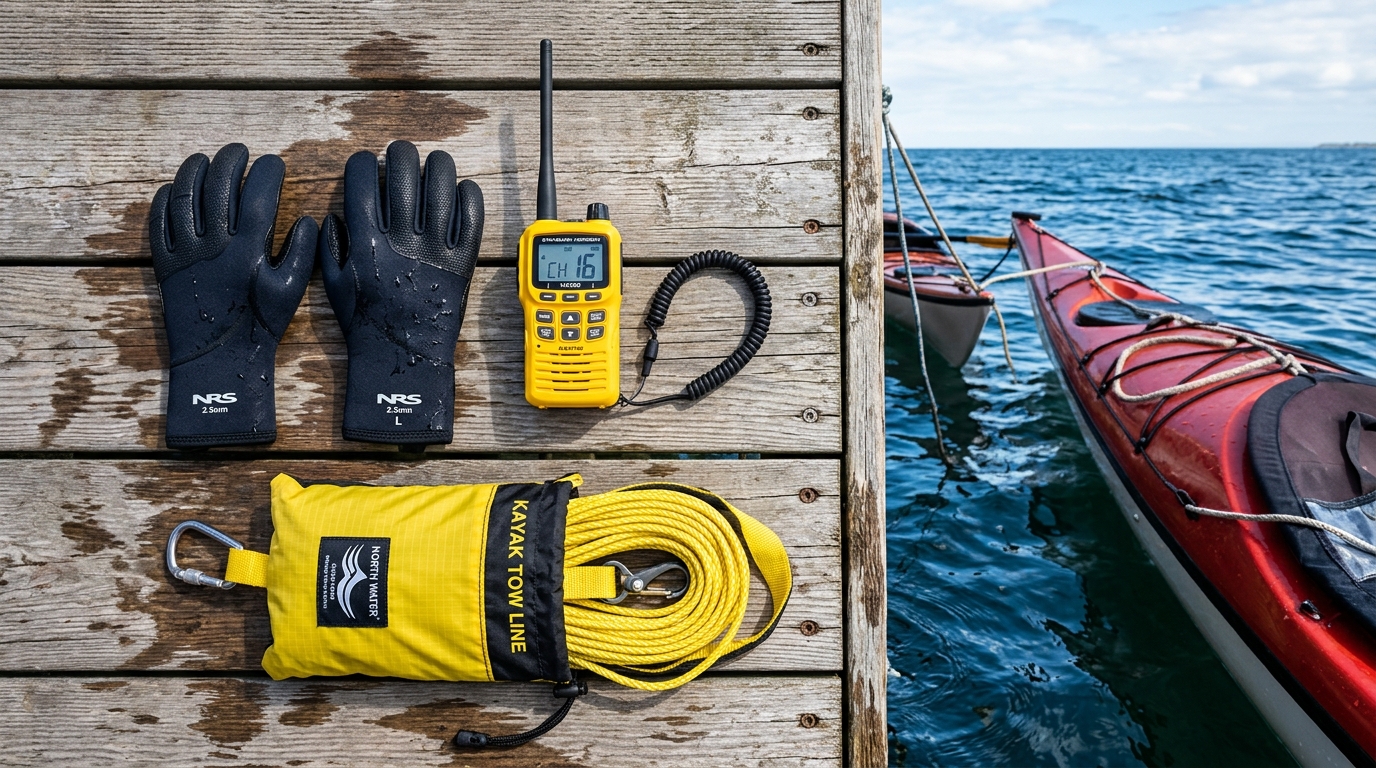
Given the remoteness of the Donegal coast, you should never launch without the absolute essentials: a well-fitted buoyancy aid, a marine VHF radio, a tow line for assisting others, and proper thermal protection (neoprene gloves and a wetsuit/drysuit).
Common Mistakes When Kayaking in Donegal
- Ignoring the swell: Looking at a wind map isn’t enough. The wind might be calm, but a 3-metre groundswell generated by a storm hundreds of kilometres away can make the sea caves deadly. Always check a swell forecast (like Windy).
- Underestimating the cold: Wearing board shorts and a t-shirt on a sit-on-top kayak is a recipe for hypothermia if the wind picks up or you fall in. Always dress for the water temperature, not the air temperature.
- Paddling alone on exposed routes: Never tackle spots like Horn Head or Slieve League solo.
- Not telling anyone your plans: Always leave a float plan with someone ashore. Tell them where you are launching, what route you are taking, and exactly when you plan to be back.
Donegal Kayak Rental and Tours
If you do not own your own equipment, or if you simply prefer the safety of local knowledge, Donegal has several excellent kayak rental companies and tour operators.
Guided tours are highly recommended if you want to explore the sea caves at Slieve League or Dunfanaghy. The local guides know exactly how the swell behaves in the caves and will keep you safe.
For a full list of verified operators, where to find them, and what they charge, check out our dedicated guide to Kayak Rental Donegal.
Frequently Asked Questions
Do I need my own kayak in Donegal? No, there are several operators offering kayak rentals and guided tours across the county, particularly in Dunfanaghy, Killybegs, and Portsalon. However, to explore independently on your own schedule, bringing your own boat is best.
Where can I see marine life in Donegal? Horn Head is spectacular for nesting seabirds like puffins and guillemots during the summer. Seals are commonly spotted in many bays, though sightings are never guaranteed, and dolphins or basking sharks are occasionally seen off the more exposed headlands.
Is it safe to kayak in Donegal as a beginner? Yes, provided you choose the right location. Mulroy Bay and the sheltered estuaries suit beginners well in calm conditions, though wind and tide still need checking before you launch. Avoid the open sea cliffs unless you are with a guided tour.
What is the best month to kayak in Donegal? May through August generally offer the most settled weather, the longest daylight hours, and the warmest water temperatures (peaking around 14–15°C in late August).
Can I use a sit-on-top kayak on the sea in Donegal? Yes, but only in sheltered bays or very close to the beach on calm days. Sit-on-top kayaks are not suitable for exposed headlands or offshore routes due to the risk of being blown out to sea.
Also Read
- Sea Kayaking Ireland — Complete Guide — Our master guide to coastal paddling across the country.
- Kayak Rental Donegal — Where to hire a kayak and book guided tours in the North West.
- Kayaking Galway and Connemara — Explore the coastline just south of Donegal.
- Kayaking for Beginners Ireland — Everything you need to know before your first paddle.

No comments yet on this guide.
Be the first to share your experience — conditions, access, hazards, or anything a future paddler should know.
Login to join the discussion