Kayaking Dublin means your choice of five completely different paddling environments within one county — the historic River Liffey running under Ha’penny Bridge in the city centre, the sheltered Grand Canal Dock at Ringsend (one of Dublin’s best beginner spots), the broad quiet Royal Canal out past Ashtown, open sea-kayaking around Dalkey Island’s seal colony five kilometres south of the city, and the sea cliffs and seabird colonies off Howth on the north peninsula. You can book a guided city tour under the bridges for €49, rent a sit-on-top in the Grand Canal Dock for €20, or paddle a sea kayak to Dalkey Island and back in three hours with all gear provided. No licence required. No experience needed for the beginner spots.
This guide covers every realistic paddling environment in Dublin in 2026 — where each is, how to get there, who runs tours or hire, what the access rules and byelaws say, the safety factors the booking sites never mention (tides, Dublin Port shipping traffic, bathing water after heavy rain), the Dublin Bay UNESCO Biosphere you are paddling through, the wildlife (grey seals, brent geese, roseate terns, harbour porpoise), and the Liffey Descent — the annual 27-kilometre race from Straffan to Islandbridge that has defined Dublin paddling culture since 1960.
Five Distinct Types of Dublin Paddling
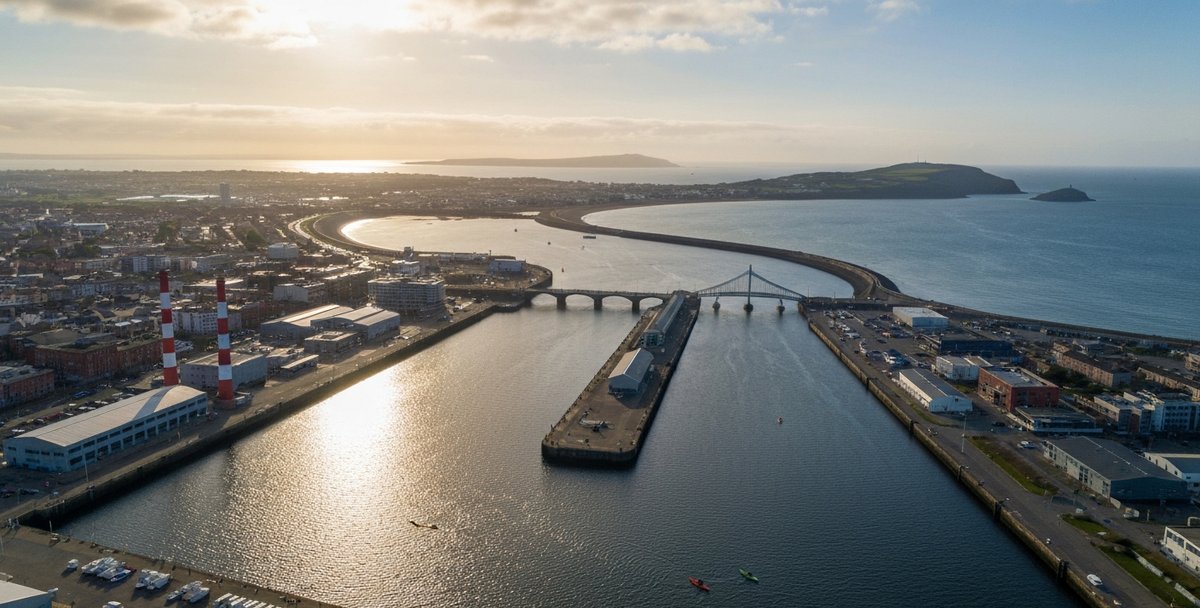
Dublin’s kayaking geography splits into five zones, each with a different character, difficulty level, and practical requirement. Knowing which zone you are paddling before you arrive saves wasted journeys and, more importantly, avoids the two genuine hazards in Dublin water: the Liffey port shipping channel and the bathing-water quality after heavy rain.
City river — the River Liffey through central Dublin, tidal, with daily ship movements through the adjacent port channel. City Kayaking runs guided tours here from a licensed pontoon; the working port channel makes this a poor spot for self-launch beginners.
Urban canal — the Grand Canal (Portobello to Grand Canal Dock) and Royal Canal (Ashtown to Leixlip). Flatwater, no significant current, no tidal influence. The sheltered Grand Canal Dock at Ringsend is Dublin’s single best spot for an hour’s first-time paddling. Individual paddlers need no permit on the canals, but must portage every lock.
Sheltered bay and estuary — Grand Canal Dock (enclosed basin), Dun Laoghaire Harbour, Malahide estuary, Dollymount/Bull Island lagoon. Sheltered from ocean swell, manageable for intermediate paddlers and short guided taster sessions.
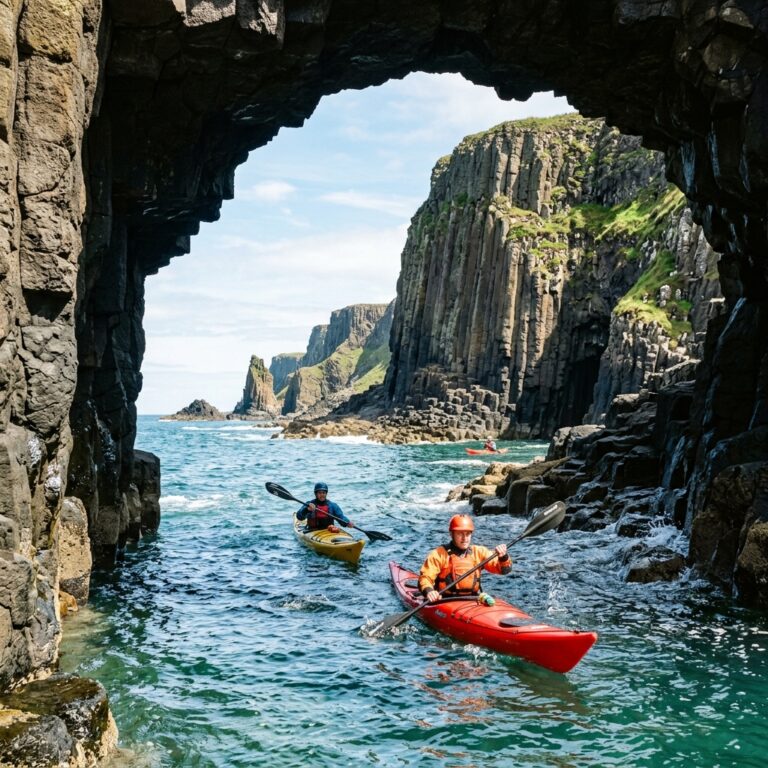
Sea kayaking — Dalkey Island and Dalkey Sound, Howth and Ireland’s Eye, Killiney Bay, Greystones (just over the county line in Co. Wicklow), Skerries. Open Irish Sea conditions. Tidal currents, swell, coastal wind. Suits intermediate to advanced paddlers or complete beginners on a guided tour.
Canal trail — the Royal Canal Blueway (146 km, Dublin to the Shannon) as a multi-day expedition route. Discussed briefly here; covered in depth in the Blueways Ireland guide.
The River Liffey — City-Centre Kayaking
Kayaking the Liffey through Dublin city centre is the single most photographed paddle in Ireland and the most complicated to do safely. The river is tidal from Dublin Bay all the way up to Islandbridge Weir, roughly 8 kilometres upstream from the Ha’penny Bridge. Above Islandbridge Weir the upper non-tidal Liffey continues westward through Lucan, Leixlip, and eventually into Wicklow — but the Dublin city stretch that tour operators use runs from the historic quayside at Bachelors Walk eastward toward the Docklands and the modern Samuel Beckett Bridge.
Why the Liffey is not a self-launch river
The stretch of Liffey that runs through Dublin city operates within Dublin Port’s jurisdiction. Dublin Port handles approximately 17,000 vessel movements a year — roughly 50 ship transits every single day — and the main shipping channel runs directly through the lower river. Recreational craft crossing the channel between, say, the north quays and the south quays, or crossing the bar from Ringsend out into the bay, must call Dublin Port Vessel Traffic Services (VTS) on VHF Channel 12 to request permission and check for incoming traffic. Leisure paddlers without a VHF radio who simply launch from a quayside and paddle into the stream are operating in a busy port approach without maritime traffic awareness. City Kayaking, the established operator running guided tours on the city Liffey, times every tour to the tidal state and knows the port schedule.
City Kayaking — the Liffey tours
City Kayaking launches from a floating pontoon on the Liffey Boardwalk at Bachelors Walk, Dublin 1, roughly between the Ha’penny Bridge and O’Connell Bridge. Tours use stable open-top (sit-on-top) double and triple kayaks, require no paddling experience, and include full safety briefing, buoyancy aids, paddles, and dry-bag storage. All tours are guided; no self-launch is currently available. The booking site is citykayaking.com.
Dublin Guided Kayak Tour — 2 hours total (about 90 minutes on the water). Paddles east toward the Docklands, passing under the Samuel Beckett Bridge and the other Liffey bridges. Price: €49 per person.
Music Under the Bridges — An evening tour with musicians performing from stage boats beneath the bridges as the kayakers pause underneath. Runs Wednesdays and Sundays throughout the summer season. Price: €59 per adult, €55 per child (under 16). Groups of ten or more: €53.10 per person.
Both tours suit complete beginners, children from the operator’s minimum age, and visitors to Dublin who want a genuinely unusual city experience. The city backdrop is extraordinary — the Four Courts dome visible over the north quay, the Custom House on the approach to the Docklands, the industrial geometry of the Samuel Beckett Bridge.
The upper non-tidal Liffey
Above Islandbridge Weir the Liffey runs north-west through Chapelizod, Lucan, and the Strawberry Beds — a stretch of Grade 2 whitewater containing a chain of large weirs requiring portage. This is club kayaking territory, not tour territory. Wild Water Kayak Club is based here, at the bank just above Palmerstown Weir. The Liffey Descent race (Straffan to Islandbridge, ~27 km) runs this stretch annually in September. Full access points, portage notes, and river conditions for the upper Liffey are covered in the River Liffey paddling route.
Grand Canal and Grand Canal Dock
The Grand Canal enters Dublin from the west, runs through Portobello and past the famous canal-bank seats at Baggot Street, descends through a series of locks into the Grand Canal Dock basin at Ringsend — and that enclosed dock is where most people in Dublin first sit in a kayak.
Grand Canal Dock — one of Dublin’s best beginner spots
Grand Canal Dock is a large sheltered, enclosed water basin in the Dublin Docklands, accessed off South Dock Road, Ringsend (D04). It stays calm even when Dublin Bay outside is choppy, has no tidal influence, and has enough open water to actually learn basic paddle strokes without feeling immediately out of your depth. Surfdock Watersports (surfdock.com) operates from a centre on the south side of the dock and has been teaching kayaking, SUP, and windsurfing here for years. If this is your first time in a kayak, the kayaking for beginners Ireland guide covers what to bring, how to capsize safely, and what to expect on your first session.
Surfdock Kayaking Solo Trips — €20 per person, one hour on the water. Single sit-on-top kayaks in the enclosed dock. Wetsuit, buoyancy aid, and helmet included. Minimum age 8. One adult may supervise up to two children under 18.
Surfdock SUP Beginner Lessons — €45 per adult (€30 for children aged 8–15), 1.5 hours. Flat-water SUP instruction in the dock.
The dock is five minutes’ walk from Grand Canal DART station on the Rosslare/Wexford line. There is no free car parking close to the dock; the nearest paid car park is across the road at the Bord Gáis Energy Theatre.
George’s Dock — HQ2O Watersports, Dublin’s new public watersports centre
Dublin City Council has built a new public watersports centre at George’s Dock, Custom House Quay, in the IFSC (International Financial Services Centre), as part of the wider Quayside Project regeneration. It will be run by Swan Leisure — which already operates the council’s Rathmines and Crumlin pools — under the HQ2O Watersports brand, and is due to open to the public from spring 2026 after trials to confirm which activities it offers, kayaking among them, on the sheltered stretch of the Liffey by George’s Dock (Irish Times, September 2025). The wider Quayside Project, which also includes a rescue pontoon for Dublin Fire Brigade’s Water Rescue Service, has a total cost of €23 million. Once open, it will become a second major public kayaking venue in the city alongside Grand Canal Dock, with a focus on access for Dublin residents rather than tourism.
The Grand Canal towpath and canals proper
Above Grand Canal Dock the canal runs west through the city. Individual recreational paddlers do not need a permit, but normal access rights still apply — use a public access point along the towpath rather than crossing private land, and check with Waterways Ireland if you’re unsure. The towpath crosses the Portobello Harbour area — where Portobello Adventure runs SUP and kayak hire on the canal — and continues out through Inchicore, Clondalkin, and eventually across the Midlands to the Shannon. The canal is flatwater with no current and essentially no swell, which suits beginners on their own boats far better than open water does. Three practical rules apply to everyone: portage every lock (kayaks may not pass through locks), do not navigate the canal between sunset and sunrise (restricted under the canal bye-laws), and follow Check Clean Dry biosecurity if your boat has been on any other waterway.
Royal Canal
The Royal Canal runs north of the Liffey, through Ashtown, Blanchardstown, and westward to the Shannon via the Royal Canal Blueway — a marked 146-kilometre paddling trail. In Dublin, the main access point for paddling is around the Ashtown area, where Royal Canal Kayak Club is based at Lock 8, Royal Canal Avenue, Ashtown, D15.
The Royal Canal is broader than the Grand Canal through parts of its Dublin stretch, with parkland and cycle paths along the banks. It is an entirely flatwater, non-tidal environment. The same rules as the Grand Canal apply: no permit for individual recreational paddlers, portage every lock, no night navigation. Kayaking.ie runs guided 2.5-hour Royal Canal trips from Confey, Leixlip (Royal Canal Amenity Centre), just across the county line in Co. Kildare — check kayaking.ie for current schedules and prices.
For paddling conditions, kilometre markers, and access points along the Dublin stretch see the Royal Canal route guide. For the full 146-kilometre Blueway to the Shannon, see the Blueways Ireland guide.
Dublin Bay — Open-Water Sea Kayaking
Dublin Bay opens due east between Howth Head to the north and Bray Head and Killiney to the south. It faces the Irish Sea directly, with no land mass between it and the Welsh coast about 100 kilometres away. Wind from the east builds open-water chop quickly — the bay is 12 kilometres across at its widest. The prevailing south-westerly runs obliquely across the bay rather than directly into it, which is one reason the bay is generally more paddleable than its full exposure to the Irish Sea would suggest.
The key safety factor is tidal range. Dublin has a mean spring tidal range of about 3.4 metres and neap range of about 2.1 metres on a semi-diurnal cycle (two high waters and two low waters per day). The tidal streams around the Liffey mouth, the harbour entrances, and particularly Dalkey Sound run hard enough in spring conditions to matter to a kayaker. For a broader look at sea kayaking around the Irish coast — gear, conditions, and the best open-water destinations — see the sea kayaking Ireland guide.
Dalkey Island — Seals, Sound and the Classic Dublin Sea-Kayak Trip
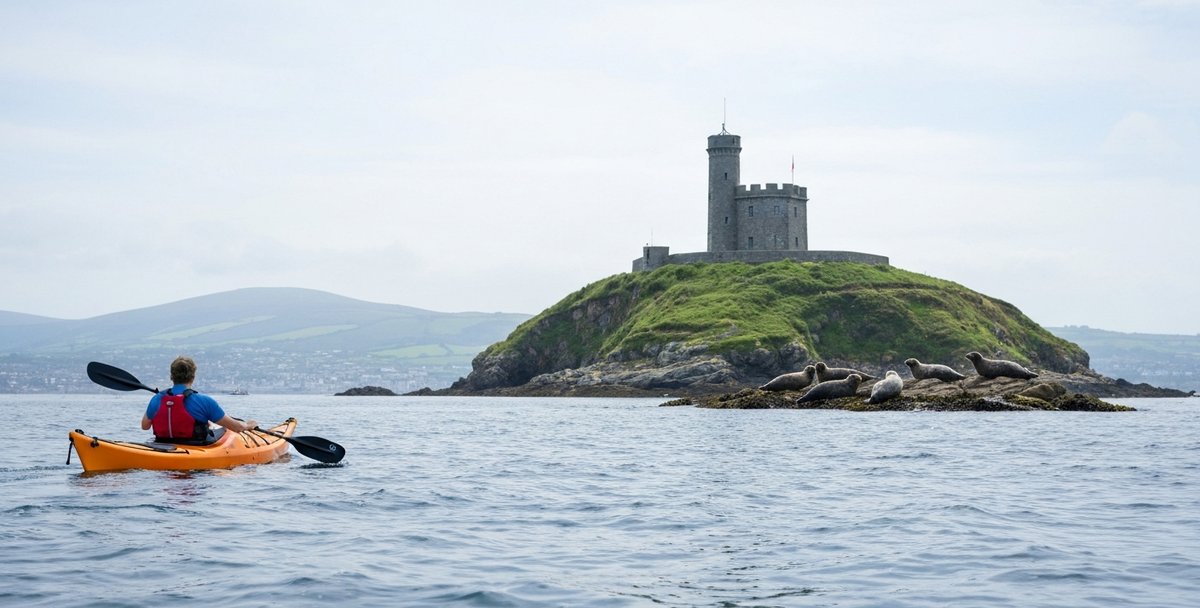
Dalkey Island is a small uninhabited granite island, roughly 0.7 kilometres long, sitting in Dalkey Sound about 300 metres off the shore at Bullock Harbour. It holds a Martello tower, the roofless ruin of St Begnet’s Church (10th century), a population of wild goats, and a colony of grey seals that haul out on the rocks on the seaward side. It is the classic Dublin sea-kayak destination — close enough to reach in 20 minutes of easy paddling from the mainland, far enough to feel genuinely like open water.
Dalkey Sound and the tidal current
Dalkey Sound is the channel between the island and the mainland shore. Sailing directions for the sound put the tidal stream at up to 1.5 to 2.5 knots, faster on springs than neaps, reversing direction roughly every six hours. Those currents are not extreme by Irish coastal standards, but in a sit-on-top kayak at 3–4 knots of paddling speed, a 2.5-knot adverse current on a spring flood is genuinely hard work. Route planning for the sound means checking the tide tables for the state of the stream and checking the forecast separately for wind and swell — a slack or favourable tide does not cancel out a stiff onshore breeze. Guided operators plan their launch times around the tide for exactly this reason, which is one concrete reason to book a tour rather than arriving independently without doing that planning yourself. Dalkey Sound also funnels the prevailing south-westerly into an acceleration zone — a moderate breeze outside the sound can feel noticeably stronger within it.
Launch points
Bullock Harbour — the primary launch for Dalkey tours. Small working harbour off Harbour Road, Dalkey. On-street parking on Harbour Road, free but tight at busy times (Bullock Harbour asks drivers to park up toward St Patrick’s Church rather than block the harbour itself). Kayaking.ie runs guided 3-hour tours from Bullock Harbour, currently at 9:30am and 2pm daily plus a 5:30pm sunset tour Wednesday to Sunday (checked September 2026 at kayaking.ie). Tours suit complete beginners aged 14 and over; all gear provided. Check kayaking.ie for current prices and booking.
Coliemore Harbour — a smaller pier directly opposite the island. More exposed to swell than Bullock. Steep slipway best used around or below mid-tide. Used by experienced sea kayakers for self-launch. Limited parking on Coliemore Road.
Portobello Adventure’s Dalkey and Killiney routes
Portobello Adventure (portobelloadventure.ie) runs guided sea-kayaking trips from multiple Dublin south-coast launch points including Dalkey, the Killiney Beach to Dalkey Island paddle (about 4 km each way along the coast), and the Howth to Baily Lighthouse route on the north peninsula. Prices start from €59 per person. Check the site for current schedule and routes.
Howth, Ireland’s Eye and the North Peninsula
Howth sits on a headland about 14 kilometres north of Dublin city centre and is reached in about 20 minutes on the DART from Connolly Station — the only sea-kayak base in Ireland that is a short train ride from a capital city’s main railway station. The village wraps around a working fishing harbour, and the sea kayaking is immediately out of the harbour mouth: seabird-covered cliffs to the north and west, Ireland’s Eye island 1.5 kilometres offshore to the north.
Ireland’s Eye
Ireland’s Eye is an uninhabited island (National Nature Reserve, Special Protection Area) with a 15th-century tower house ruin and a Martello tower. It holds nesting colonies of gannets, guillemots, razorbills, kittiwakes, and Manx shearwaters. Grey seals haul out on the rocks on the eastern shore. The island is the headline wildlife destination for anyone sea-kayaking out of Howth.
Shearwater Sea Kayaking
Shearwater Sea Kayaking (shearwaterseakayaking.ie) is the specialist sea-kayak operator based at the Middle Pier, Howth, and is the most technically serious of the Dublin operators — running proper closed-cockpit sea-kayak courses (not sit-on-tops) through a structured Canoeing Ireland skills programme.
Try Sea Kayaking Day — full-day beginner course (approximately 10:00 to 15:00). Morning instruction in Howth Harbour; afternoon trip, weather permitting, toward Ireland’s Eye with a seal colony visit. Traditional fish and chips included at the end. Price: €120 per person.
Weekend Special — two-day weekend beginner course working toward the Canoeing Ireland Level 2 Skills Award. Meeting point: Middle Pier, East Pier car park, Howth. Price: €220 per person (checked September 2026 at shearwaterseakayaking.ie).
Kayak Skills Development Day — approximately 11:00 to 15:00, for paddlers with some experience looking to advance technique. Check the booking page for current price.
Shearwater operates roughly March to October. Its programmes are suited to people who want to learn proper sea kayaking rather than a tourist taster session — the difference being closed-cockpit kayaks, real skills progression, and routes that depend on weather and tidal conditions.
The Howth cliffs and peninsular paddle
The north face of Howth Head rises to sea cliffs of 70–80 metres, accessible by kayak from the harbour along the north shore of the peninsula. Experienced sea kayakers paddle out from the harbour, around the headland past the Baily Lighthouse on the south-east tip, and complete the peninsula loop. This is exposed coastal sea kayaking — not suitable for beginners — with sections of cliff where there is no landing for several kilometres.
Bull Island and North Dublin Bay
North Bull Island lies north of the Clontarf shore, separated from the mainland by a narrow channel, its western flank sheltered behind the North Bull Wall. The lagoon between Bull Island and the Clontarf/Raheny coast is calmer and shallower than open Dublin Bay, and the wall provides a degree of shelter from prevailing south-westerlies. This makes it a reasonable open-air SUP and flatwater kayak environment on settled days.
Bull Island is the core zone of the Dublin Bay UNESCO Biosphere (see the wildlife section below) and a National Nature Reserve, Special Protection Area, SAC, and Ramsar wetland. The entire island and its surrounding waters are among the most legally protected natural areas in Dublin. No commercial kayak or SUP operator currently operates from Bull Island for this reason; it is a self-launch wild-paddling environment for experienced recreational paddlers who understand and respect the bird nesting and seal pupping seasons.
Dollymount Strand, which runs the full 5-kilometre length of the island, is one of Dublin’s three designated bathing waters. Its 2025 EPA water quality classification was Good, but that annual grade is not a same-day clearance — check Beaches.ie or Dublin City Council’s bathing water alerts before you launch, and stay out of the shallow inshore water near Dollymount if a prior warning, advisory or prohibition notice is active (see the safety section below on Ringsend overflow).
Dun Laoghaire — South Dublin’s Sheltered Harbour
Dun Laoghaire Harbour sits 12 kilometres south of Dublin city centre on the DART south line (Dublin city centre to Dun Laoghaire is roughly 25 minutes by train). The harbour is enclosed by two granite piers — the East Pier is about 1.3 kilometres long, with the West Pier slightly longer at around 1.55 kilometres, together forming one of the longest harbour enclosures in Ireland — and the inner harbour provides some of the most sheltered paddling water on the south Dublin coast.
Why Dun Laoghaire suits kayakers
The two piers create a substantial enclosed basin that is largely protected from open-sea swell. Inside the harbour, conditions are significantly calmer than Dalkey Sound or the exposed coast at Killiney even when wind and swell are up in the outer bay. This makes Dun Laoghaire useful as a launch base for intermediate sea kayakers who want to paddle the coast south toward Sandycove, Scotsman’s Bay, and the Forty Foot, or north toward Blackrock.
The harbour entrance — the gap between the ends of the East and West piers — does have a noticeable tidal current on full flood and ebb. It is not a beginner hazard but worth understanding: paddling out through the gap against a running spring ebb is harder work than it looks from the pier.
INSS — kayak taster sessions at the West Pier
The Irish National Sailing and Powerboat School (INSS) operates from the West Pier, Dun Laoghaire, and runs kayak taster sessions for individuals and groups. Dun Laoghaire Harbour itself serves as the taster venue — sheltered, with no shipping traffic and easy self-rescue distance to the pier. Check inss.ie for current prices and dates.
Self-launch access
The main public slipway is at the Coal Harbour, inside the West Pier. It is tide-useable across most of the tidal range. DLRCC (Dún Laoghaire–Rathdown County Council) also maintains access at the People’s Park slipway on the Promenade. Both launch points give clean entry to the inner harbour with no commercial traffic to contend with.
Sandycove Kayak Club, based at Sandycove Avenue West (2 kilometres south of the harbour), uses the Dun Laoghaire coast as its regular paddling ground and runs Sunday morning club paddles year-round.
North County Dublin — Malahide, Rush and Skerries
North county Dublin has three practical sea-kayaking locations within an hour of the city, all with calmer conditions than the exposed south county coast and good access by road.
Malahide estuary — the Broadmeadow estuary north of Malahide village is a sheltered, shallow, inland-estuary environment well suited to beginner sea kayakers and SUP paddlers. The estuary floods and empties with the tide, so launching near high water gives the most water. The slipway at The Green, Strand Road, Malahide, is the main access point.
Skerries — a coastal town about 33 kilometres north of Dublin with two launch slipways: one beside the RNLI lifeboat station and one opposite the yacht club. The lifeboat-station slipway is tide-restricted; the other works across more of the tidal range. Portobello Adventure includes Skerries in its guided itinerary. The town’s rocky headlands and three nearby islands (Saint Patrick’s, Colt, Shenick) make it a worthwhile destination for sea paddlers wanting variety.
Rush and Loughshinny — Rush harbour and the small coves at Loughshinny further north give sheltered launches on the right tidal state. The Rush area is generally flatter water than Howth or Skerries, making it a reasonable option for north-county paddlers who want to avoid commuting to the city.
Operators, Tours and Hire in Dublin (2026)
Every price below is in euro, in-season, booked directly with the operator. Aggregator platforms (Viator, GetYourGuide, Tripadvisor Experiences) list the same tours at higher prices — always book direct.
| Operator | Activity | Duration | Price | Launch |
|---|---|---|---|---|
| City Kayaking | Dublin Guided Kayak Tour | 2 hours | €49/person | Bachelors Walk, Liffey |
| City Kayaking | Music Under the Bridges | 2 hours | €59 adult / €55 child | Bachelors Walk, Liffey |
| Surfdock | Kayaking Solo Trip | 1 hour | €20/person | Grand Canal Dock |
| Surfdock | SUP Beginner Lesson | 1.5 hours | €45 adult / €30 child | Grand Canal Dock |
| Portobello Adventure | Sea Kayak (Dalkey, Howth, Skerries) | 2–3 hours | from €59/person | Multiple south Dublin |
| Shearwater | Try Sea Kayaking Day | ~5 hours | €120/person | Howth Harbour |
| Shearwater | Weekend Special (Level 2 course) | 2 days | €220/person | Howth Harbour |
| Kayaking.ie | Dalkey Island Tour | 3 hours | see site | Bullock Harbour, Dalkey |
| Kayaking.ie | Royal Canal | 2.5 hours | see site | Leixlip/Confey |
| INSS | Kayak Taster | ~2 hours | see site | Dun Laoghaire West Pier |
Prices checked September 2026. Always verify on the operator’s own website before booking — prices change and tours sell out. Prices marked ‘see site’ were not independently confirmed for this guide.
What operators provide
All the operators above include buoyancy aid and paddle. Wetsuits are included at Surfdock and Shearwater; some operators ask you to bring your own swimwear or quick-dry clothing underneath. Dry bags, waterproof pouches, and changing facilities vary by operator — check at booking.
Permits, Byelaws and Access Rules
Do you need a licence or permit to kayak in Dublin?
No licence is required to paddle a recreational kayak or canoe in Ireland. There is no equivalent of a driving licence or boat registration for recreational paddling. However, Irish law (Maritime Safety Act 2005, SI 3 of 2006) requires that every kayak and canoe carry one lifejacket or PFD for each person on board. On craft under six metres length — which covers virtually all kayaks — personal flotation devices must conform to a recognised standard (CE-marked or equivalent).
Grand Canal and Royal Canal — byelaw rules
Individual recreational paddlers do not need a permit to paddle the Grand Canal or Royal Canal. However, several rules under the Canals Act 1986 (Bye-Laws) 1988 apply to all users — see Waterways Ireland’s boater information for the current byelaws and any local navigation notices:
- Portage every lock. Kayaks and canoes may not pass through canal locks. Portage (carry around) each lock. Failure to do so risks contact with lock gates and significant currents during filling/emptying.
- No night navigation. Navigation between sunset and sunrise is restricted under the bye-laws.
- Biosecurity. Check Clean Dry applies to any boat moved between waterways. The Grand Canal and Royal Canal remain free of zebra mussels; boats coming from the Shannon system or affected lakes must be cleaned and dried before launching.
- Commercial use. Tour operators running commercial kayak trips on the canals must register their vessels with Waterways Ireland and comply with additional commercial vessel requirements.
Dublin Port and the Liffey
The lower River Liffey and Dublin Bay fall under Dublin Port Company jurisdiction and the Irish Coast Guard’s Vessel Traffic Services (VTS). Kayakers crossing the shipping channel must call Dublin Port VTS on VHF Channel 12 for a traffic update and permission before crossing; in an emergency, the Coast Guard monitors VHF Channel 16, and 112 reaches them by phone (see Dublin Port’s water safety guidance). The following basins in Dublin Port are prohibited to recreational craft without specific permission: Alexandra Basin, Oil Zone, Ferry Terminal quays, and other operational port areas. A VHF call on its own does not make a crossing safe — it only tells you what traffic is coming, and you still have to get across in time. Self-launching directly onto the Liffey in the working port area carries real risk for that reason, which is why City Kayaking runs its tours from a licensed pontoon under specific commercial harbour arrangements rather than a simple quayside launch.
Killarney comparison note
Unlike kayaking the Killarney Lakes (which requires a free NPWS permit for every private paddler due to the zebra mussel risk), Dublin’s canal system and bay have no equivalent permit requirement for individual recreational paddlers. The relevant biosecurity obligation is Check Clean Dry on any boat moving between waterways, particularly those entering Dublin from infected lakes.
Safety — Tides, Dublin Port Shipping, and Water Quality After Rain
Tidal range and where currents run hard
Dublin operates on a semi-diurnal tidal cycle — two high waters and two low waters every 24 hours and 50 minutes, roughly six hours between high and low. Mean spring tidal range is approximately 3.4 metres; neap range approximately 2.1 metres. The tidal streams that matter to kayakers are:
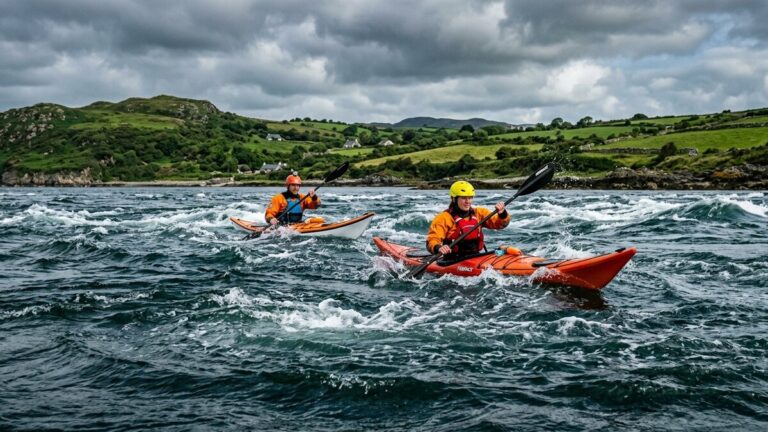
Dalkey Sound — runs at about 2.5 knots on springs, 1.5 knots on neaps. The flood (incoming tide) runs broadly northward through the sound; the ebb runs south. Getting this wrong on a spring tide means paddling hard and going sideways.
The Liffey mouth and bar — the channel between the North and South Bull Walls is a venturi constriction. The ebb pours seaward through it at pace. Launching from the Poolbeg side and misjudging the ebb state means being swept southeast toward open water.
Dun Laoghaire Harbour entrance — the harbour is largely sheltered but the approach and the gap between the East and West piers has a current on the full flood and ebb. Not dangerous for competent paddlers, but worth understanding.
The Met Éireann marine forecast at met.ie, the Irish Tides app, and the UKHO tide tables for Dublin (Port of Dublin) are the sources Dublin-based paddlers use for tidal planning.
Dublin Port shipping traffic
With 17,000 vessel movements per year — approximately 50 ship transits per day — Dublin Port’s shipping channel is one of the busiest waterways in Ireland. Vessels entering and leaving the port use the North and South channels either side of the Bull Wall. Recreational craft crossing the channel between Poolbeg and the Clontarf/Howth side must call VTS on VHF Channel 12. A Stena Line or Irish Ferries vessel doing 14 knots in the channel is not visible to the ship’s bridge as a small kayak, and will not stop. Keep well clear of the shipping channel unless you have called VTS, know what is coming, and have the ability to cross quickly.
Water quality and the “no paddle after heavy rain” rule
Dublin has three EPA-designated bathing waters: Dollymount Strand (2025 classification: Good), Half Moon / Blackrock (2025: Excellent), and Sandymount Strand (2025: Sufficient). These are annual classifications built from multi-season bacteriological sampling — they say nothing about the water on the day you turn up. Check Beaches.ie and the council’s bathing water notices before you launch, and stay off the water while a prior warning, advice-against-bathing or prohibition notice is in place.
The relevant hazard for paddlers is the Ringsend Wastewater Treatment Plant overflow. After heavy rainfall, the combined sewer system serving much of Dublin can surcharge, and diluted untreated sewage is released through CSO (combined sewer overflow) outlets into the Liffey and into Dublin Bay near Ringsend. This is not a Dublin-specific failure — it affects most major Irish cities — but it is a genuine pathogen risk for anyone immersed in the water (via capsize, swimming, or swallowing spray). Water quality risk near the Liffey, Ringsend and Sandymount stays elevated for a period after significant rainfall while the system clears, and Dollymount and Half Moon/Blackrock — further from the outfalls, with better flushing from the open bay — tend to recover faster. The only way to know the actual status of any of these spots on a given day is to check Beaches.ie or the council notices before you launch, not to count hours since the last downpour.
Cold-water shock — Dublin’s year-round risk
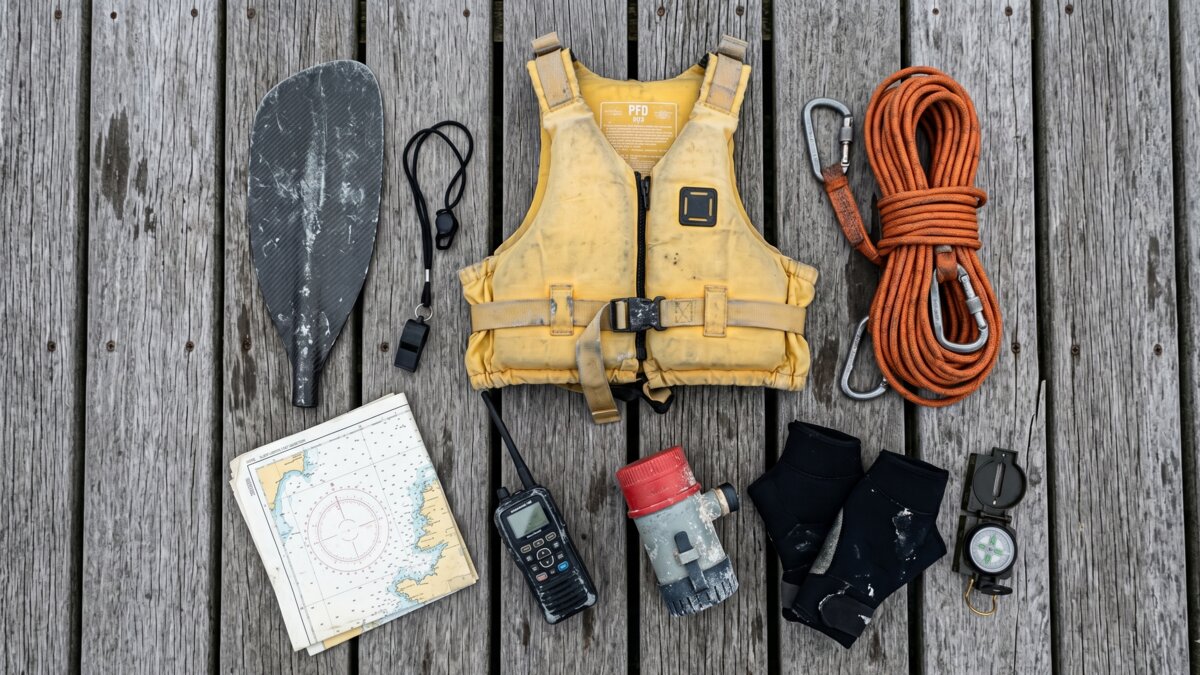
Sea temperature off Dublin ranges from approximately 8°C in March (the coldest month — the sea lags behind the coldest air by six weeks) to approximately 15°C at the peak of late summer. RNLI guidance defines cold water as anything below 15°C. Because Dublin sea temperatures only briefly touch 15°C in the warmest part of summer, cold-water shock from capsize is a year-round risk in Dublin, not just a winter one. Cold-water shock causes an involuntary gasp reflex, a ten-fold increase in breathing rate, raised blood pressure, and disorientation — all within the first 60 seconds of immersion. A buoyancy aid that keeps your airway above water during those first seconds is the single most important piece of safety equipment on Dublin water.
Dublin Bay UNESCO Biosphere — Wildlife You Paddle Through
Dublin Bay is a UNESCO Biosphere Reserve — the only one located entirely within a capital city in the world. North Bull Island received the original designation in 1981. In 2015 the designation was expanded to the full bay, covering over 300 km² and reaching from Portmarnock in the north to Killiney in the south.
The Biosphere is divided into three zones. The core zone (50 km²) includes the areas of highest natural value: Bull Island, Dalkey Island, Ireland’s Eye, Howth Head, and the Tolka and Baldoyle Estuaries. The buffer zone (82 km²) includes parkland and green belts. The transition zone (173 km²) includes the residential coastline, harbours, and the port. A kayaker paddling from Grand Canal Dock to Dalkey Island passes through all three zones in a single day.
North Bull Island — seals, geese and the accidental nature reserve
Bull Island is the ecological heart of the bay. Grey seals and harbour (common) seals both occur here, hauling out on the sandy spits and sheltered north-facing shorelines. Bull Island is one of the most important Irish sites for light-bellied brent geese, which winter here in nationally and internationally important numbers (official surveys have recorded average peaks in the low thousands) after migrating from their Arctic Canada breeding grounds, arriving around October and remaining until April — part of a wider population that winters across several Irish estuaries, not Bull Island alone. In high summer the geese are gone and the island hosts breeding terns, oystercatchers, and ringed plovers. The saltmarsh on the island’s inner shore is among the best-preserved in Dublin.
Bull Island was designated Ireland’s first bird sanctuary in 1931, and is now a National Nature Reserve (1988), Special Protection Area, Special Area of Conservation, and Ramsar wetland simultaneously. Paddlers on the sheltered lagoon between Bull Island and the Clontarf shoreline should stay well clear of hauled-out seals and avoid the bird nesting zones on the beach between April and August.
Dalkey Island — seals and the sound
Dalkey Island hosts grey seals that regularly haul out on its seaward rocks. They are used to human presence and are often visible on a calm day, though a sighting is never guaranteed — approaching or touching seals is prohibited under wildlife legislation and the Biosphere’s responsible-use guidelines. Guided operators brief this explicitly before launch. The island is also home to wild goats that have lived there for centuries, descended from domestic stock long since abandoned.
Ireland’s Eye — gannets, guillemots and one of Europe’s rarest terns
Ireland’s Eye, the uninhabited island off Howth, holds what is described as one of the most ecologically significant seabird colonies on the east Irish coast. Gannets nest on the rocky stacks. Guillemots, razorbills, and kittiwakes pack the cliff ledges. The island is an important tern nesting site, and the offshore rock of Rockabill to the north (not accessible to kayakers) holds over 1,600 pairs of roseate terns — the largest colony in Europe of one of the rarest breeding seabirds in the world. Sea kayakers off Howth paddle within the feeding range of these birds.
Harbour porpoise and dolphins
Harbour porpoise occur throughout Dublin Bay year-round, most regularly spotted in the waters between Dalkey Island and the South Wall in autumn and spring. Common dolphins move through the outer bay seasonally. These are sightings, not guaranteed encounters — but they are more common than most Dublin paddlers realise, because paddling quietly from a low vantage point is actually a much better way to spot harbour porpoise than standing on a pier.
Kayaking Clubs in Dublin
Joining a Dublin kayak club is the cheapest long-term route to a paddle on Dublin water: a Canoeing Ireland club membership costs €40 per year (senior), €20 per year (student), €15 per year (junior), covering on-water insurance for every club paddle. That is less than a single guided tour, for unlimited club-organised paddling. Every active Dublin club pays additional club-level affiliation to Canoeing Ireland and charges its own joining or annual subscription fee on top of the Canoeing Ireland levy — the combined total varies by club, but typically runs €80–€150 per year all-in. For a national overview of how clubs work and what to look for, see the kayaking clubs Ireland guide.
Canoeing Ireland is headquartered at the Irish Sport HQ on the Sport Ireland Campus, Blanchardstown, Dublin 15.
Wild Water Kayak Club (WWKC)
The WWKC is one of the largest paddling clubs in Ireland, based on the banks of the Liffey at the Strawberry Beds, just above Palmerstown Weir, Dublin. It covers multiple disciplines: whitewater, wildwater racing, canoe polo, open canoeing, slalom, and flatwater marathon. It runs beginner courses each year teaching skills toward the Canoeing Ireland Level 2 River Kayaking Skills Award. Contact: beginners@wwkc.net; website: wwkc.net.
Dublin Kayak Club (DKC)
The Dublin Kayak Club was founded in 2024 and is based at Sluice Weir on the Liffey. It covers flatwater and river kayaking for Dublin-based paddlers who want club access to the Liffey without a commute to the Strawberry Beds. As a newer club, check its current status and beginner programme at canoe.ie’s club directory.
Royal Canal Kayak Club
Royal Canal Kayak Club is based at Lock 8, Royal Canal Avenue, Ashtown, Dublin 15. The club specialises in flatwater and canal paddling and provides the most accessible route into kayaking for paddlers based in the north-west Dublin suburbs. The Royal Canal forms the club’s home water and connects directly to the Royal Canal Blueway for longer paddles.
Sandycove Kayak Club
Sandycove Kayak Club is a sea-kayak club with a boathouse at Sandycove Avenue West, Sandycove, Co. Dublin. Members paddle the south-county coast, Dalkey Island, Scotsman’s Bay, and Dun Laoghaire Harbour. Organised paddles run on Sunday mornings at 11am year-round (weather and conditions permitting) and on summer Wednesday evenings.
The Adventure Project
The Adventure Project runs from the Lock Keeper’s Cottage, Newcomen Bridge, North Strand, Dublin 3. Contact: kayak@theadventureproject.ie. It offers kayak instruction and club activity on the Royal Canal in the inner north city.
University clubs
UCD, Trinity College Dublin, and DCU all have kayaking or paddlesport societies affiliated to Canoeing Ireland, typically running beginner sessions in their first terms and competing in intercollegiate events. If you are based at one of these institutions, the college paddlesport society is likely your cheapest and most sociable route into kayaking.
The Liffey Descent
The Liffey Descent is Ireland’s most famous paddling event — an annual race from Straffan, Co. Kildare, to Islandbridge, Dublin, covering approximately 27 kilometres of the non-tidal upper Liffey, including a chain of weirs requiring portage or running depending on water level. It has been held annually since 1960 and typically takes place in September. Entrants range from elite wildwater racing kayaks to recreational open canoeists and everything between. For a Dublin-based paddler who joins a club and builds their river skills over a season, the Liffey Descent is the first real test and often the event that defines whether they continue paddling seriously.
Best Time to Paddle Dublin
Month-by-month paddle planner
| Month | Sea Temp | Sunset | Canal / Dock | Liffey Tours | Dublin Bay / Sea | Notes |
|---|---|---|---|---|---|---|
| Jan | 10°C | 16:30 | Good | Closed | Poor | Drysuit for sea; canal fine year-round |
| Feb | 9°C | 17:30 | Good | Closed | Poor | Coldest sea of the year in late Feb/Mar |
| Mar | 8°C | 18:30 | Good | Fair | Fair | Tours start late March; wetsuit minimum |
| Apr | 9°C | 20:15 | Good | Good | Fair | Evening tours starting; 5mm wetsuit |
| May ★ | 11°C | 21:15 | Excellent | Excellent | Good | Peak season begins; long evenings |
| Jun ★ | 13°C | 21:50 | Excellent | Excellent | Excellent | Best all-round month; sunset 21:50 |
| Jul ★ | 15°C | 21:30 | Excellent | Excellent | Excellent | Warmest sea (15°C); book tours in advance |
| Aug ★ | 15°C | 20:45 | Excellent | Excellent | Excellent | High summer; busiest month |
| Sep ★ | 14°C | 19:30 | Excellent | Good | Good | Liffey Descent race; sea still warm |
| Oct | 12°C | 18:00 | Good | Fair | Fair | Brent geese arrive Bull Island; best wildlife month |
| Nov | 11°C | 16:30 | Good | Closed | Poor | Clubs continue; guided tours end |
| Dec | 10°C | 16:10 | Good | Closed | Poor | Drysuit for sea; Canal Dock open year-round |
★ Peak season (May–Sep) — longest daylight, warmest water, most operators running their full schedule (always confirm when booking).
These are general seasonal patterns, not a day-by-day safety rating — check the live marine forecast, the current water temperature, your own ability and your rescue plan before deciding whether to go out, whatever the month says.
Dublin has no bad month for paddling if you choose the right venue. Grand Canal Dock is paddleable year-round — it is enclosed, calm, and a wetsuit takes care of the cold. Sea kayaking in Dublin Bay is best from May to September, with the sweet spot in June and July when the sea reaches 13–15°C, daylight extends past 9:30pm, and the prevailing south-westerly is at its lightest in the summer sea-breeze pattern.
January–February — Short days (sunset ~5pm), sea temperature 9–10°C. Drysuit territory for sea paddling. Grand Canal Dock is fine for short sessions. Liffey tours typically suspended.
March–April — Sea temperature reaches its coldest (around 8°C in March — later than the coldest air months because the sea retains winter cold). Daylight extending fast. Good for canals. Beginner sea tours at Howth and Dalkey beginning from late April.
May–June — Sea temperature rising through 10–13°C. Long evenings. Dalkey and Howth tours running daily. Best window for anyone new to sea kayaking on the bay. The Liffey city tours are at their most photogenic in the slanted June evening light.
July–August — Sea temperature peaks ~14–15°C. Up to 17 hours of daylight in June. Dublin’s peak tourist season: advance booking on City Kayaking and Kayaking.ie is essential. Music Under the Bridges runs Wednesdays and Sundays throughout. Evening sunset paddles on the bay are exceptional.
September–October — Light-bellied brent geese arrive at Bull Island around October — the best wildlife kayaking month. Sea temperature still reasonable (12–13°C through September, dropping through October). Liffey Descent race in September.
November–December — Daylight shrinks to 8 hours. Sea temperature 9–11°C. Guided tours wind down. Club paddlers continue year-round with appropriate gear.
Wind and the offshore-wind trap
The single most dangerous weather pattern for Dublin Bay beginners is an offshore wind: light to moderate from the west or north-west, blowing away from the shore toward open sea. Dollymount and Bull Island in particular face eastward into the bay — a westerly or north-westerly appears to be behind the paddler on the way out and blows them further from shore. Turning to come back into the same wind can be exhausting or impossible in a sit-on-top for a beginner. Always check wind direction at met.ie before launching at Bull Island or the bay, and ensure the wind is onshore or cross-shore, never offshore.
What to Wear Across the Seasons
May to September (canal and Grand Canal Dock) — swim shorts or quick-dry leggings, a rash vest or thin top. You will get wet from paddle drip if nothing else. Buoyancy aid provided by operators; bring a change of clothes in a dry bag.
May to September (bay and sea kayaking) — typically a 3mm shortie or 3mm full wetsuit plus neoprene shoes, though what you actually need depends on the water temperature that week and how long you plan to be out. The sea temperature in Dublin rarely feels warm even in July; a wetsuit takes some of the shock out of a capsize. Wind can be cold even on sunny days — a thin paddling jacket over the wetsuit is useful. Buoyancy aid worn at all times.
October to April (sea kayaking) — most paddlers move up to a 5mm full wetsuit at minimum, and many choose a drysuit; check the current water temperature and your own cold tolerance rather than just the calendar. Neoprene gloves, hood, and boots. Cold-water shock risk from capsize is real: once you are wet in Dublin water below 10°C, get back aboard your boat within seconds, not minutes, and know your ability and your rescue plan before you go out. Guided tours typically do not run in winter; clubs handle winter paddling with appropriate cold-water protocols.
Year-round — No cotton. Cotton retains water and cools the body rapidly when wet. Synthetic base layers (polyester, merino wool) or neoprene are the only sensible choices next to skin on Dublin water.
Common Dublin Kayaking Mistakes
Launching onto the Liffey without knowing the port channel. The Liffey is a working port approach. Renting an inflatable kayak from a supermarket, pumping it up at the quayside, and paddling east toward the bay is not a joke situation — the port channel has ship traffic, outgoing ferries, and Liffey tidal ebb. Use City Kayaking for city Liffey paddling.
Paddling Dollymount or Ringsend without checking for a bathing water notice. The visual appearance of the water gives no indication of E. coli contamination after a combined sewer overflow, and the risk doesn’t switch off on a fixed clock. Check Beaches.ie or Dublin City Council’s bathing water alerts for the current status before launching, and stay off the water during any advisory or prohibition.
Ignoring the offshore wind at Bull Island. The Bull Wall beach faces east. A westerly breeze gives false confidence going out — turning into it on the way back is a different matter entirely.
Underestimating Dalkey Sound on springs. Two and a half knots of tidal current is fast enough to make a beginner feel completely out of control in a sit-on-top. If your operator says “the current today means we go out first and ride the tide back,” that is not a tourist gimmick — that is safety management.
Not booking in advance in summer. City Kayaking, Kayaking.ie, and Shearwater all sell out on summer weekends in July and August. Same-day walk-ups are often turned away. Book at least a week ahead in peak season.
Assuming the Grand Canal Dock and the canals are the same venue. The Grand Canal Dock is an enclosed, tidal-free basin — ideal. The canal above it is narrow, requires portaging locks, and is a completely different paddle. Both are excellent, but they suit different skill levels and require different logistics.
Skipping Check Clean Dry on canals. Bringing a kayak from an infected lake onto the Grand Canal without drying it first risks introducing zebra mussels to one of the last clean canal systems in Ireland.
Frequently Asked Questions About Kayaking Dublin
Where is the best place to kayak in Dublin for a beginner?
Grand Canal Dock in Ringsend is one of the best first-paddle spots in Dublin. The enclosed basin is calm, tide-free, and sheltered from bay swell even when the weather outside is doing something else entirely. Surfdock runs one-hour sit-on-top hire sessions there for €20. If you want a guided experience with a city backdrop, City Kayaking’s Liffey tour (€49) requires no experience at all. Both are solid options on a first visit.
Is sea kayaking in Dublin Bay suitable for beginners?
Dublin Bay itself is open water — not a beginner venue for solo paddling. However, guided sea-kayak tours to Dalkey Island (Kayaking.ie, Portobello Adventure) are graded for complete beginners aged 14 and over: the operator manages tidal timing, provides a sit-on-top kayak, and guides the group the entire way. Howth Harbour is also used by Shearwater for beginner sea-kayak days. The key point is that a guided tour on Dublin Bay is very different from launching independently, and the former is safe for beginners; the latter is not.
Can you kayak on the River Liffey through Dublin city?
Yes, through City Kayaking’s guided tours, which launch from a licensed pontoon at Bachelors Walk, Dublin 1. The 2-hour tour paddles east toward the Docklands, passing under the Samuel Beckett Bridge and the city’s historic quaysides. Self-launch on the Liffey in the port area is not a realistic option for recreational paddlers — the shipping channel operates under Dublin Port jurisdiction and requires VHF communication with Vessel Traffic Services. City Kayaking is the established operator running licensed guided tours on the city Liffey.
How much does kayaking in Dublin cost?
Prices range from €20 for a one-hour hire session at Grand Canal Dock (Surfdock) to €120 for a full-day sea-kayak course at Howth (Shearwater). The City Kayaking Liffey tour is €49 per person; the Music Under the Bridges evening tour is €59. Guided sea-kayak trips to Dalkey Island through Kayaking.ie or Portobello Adventure start from €59. Joining a kayaking club works out at €80–€150 per year all-in — less than two guided tours, for unlimited paddling.
Do you need a licence or permit to kayak in Dublin?
No licence is required for recreational kayaking in Ireland. You must carry a CE-marked lifejacket or buoyancy aid for each person on board. No permit is needed to paddle the Grand Canal, the Royal Canal, or Dublin Bay as an individual recreational paddler. The only Dublin-specific restriction is that the lower Liffey and Dublin Port’s active shipping areas are not open to self-launch recreational craft — use a licensed commercial operator.
Where can you see seals kayaking near Dublin?
Dalkey Island is where paddlers most often spot grey seals in Dublin, hauled out on the seaward rocks and visible on many guided tours from Bullock Harbour, though a sighting is never guaranteed. Ireland’s Eye off Howth also has seals on the eastern shoreline, and Bull Island’s sheltered north shore gets regular sightings for paddlers on the Clontarf lagoon side.
What is the best time of year to go kayaking in Dublin?
May to September covers the main guided-tour season and gives the best conditions for sea kayaking on Dublin Bay — sea temperatures climb through 11–15°C, daylight extends past 9:30pm in June and July, and most operators run their full schedule. Grand Canal Dock is paddleable in any season, weather and forecast permitting. October is the standout wildlife month: light-bellied brent geese arrive at Bull Island in their thousands, and seal haul-out numbers are at their peak. For long summer evenings on the water with the city skyline behind you, June is hard to beat.
Final Word
Kayaking Dublin in 2026 means more options, better operators, and more active infrastructure than any other year before it. Grand Canal Dock is the obvious starting point — sheltered, warm-weather or not, and an hour on the water for €20 with Surfdock. From there, a City Kayaking Liffey tour gives you the city from the water in a way no other transport can. For the full Dublin sea-kayak experience, the Dalkey Island seal tour or a beginner day with Shearwater at Howth are both exceptional afternoons. And when you are ready for something longer — a day paddling the Royal Canal toward the midlands, or a place on the start line at Straffan for the Liffey Descent — the clubs above will get you there.
Dublin is also a gateway into a broader set of Irish paddling destinations: the Wicklow coast under an hour south, and further out, West Cork’s sea-kayak coast and Lough Hyne and the Killarney Lakes with the NPWS permit, both around four hours’ drive, plus the Blueways network that connects Dublin’s canals to the Shannon 146 kilometres west. The city is a hub, not an endpoint.
Also Read
- Best Places to Kayak in Ireland — 16 Spots Rated and Mapped (2026)
- Kayaking Killarney — Three Lakes, Permits, Operators and Six Routes (2026)
- Kayaking West Cork — Lough Hyne, the Wild Atlantic Coast and Night Paddling (2026)
- Blueways Ireland — the Complete Guide to Paddling the Canal and River Trails (2026)
- Kayak Rental Ireland — How to Find the Best Hire Near You (2026)
- Kayaking Clubs Ireland — How to Find, Join and Get the Most From a Club (2026)
- Kayaking for Beginners Ireland — the Complete First-Paddle Guide (2026)
- Sea Kayaking Ireland — Where to Paddle, Safety Essentials and Getting Started (2026)

No comments yet on this guide.
Be the first to share your experience — conditions, access, hazards, or anything a future paddler should know.
Login to join the discussion